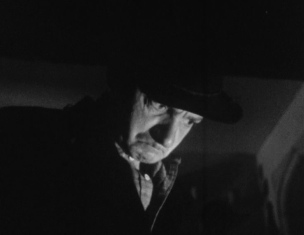
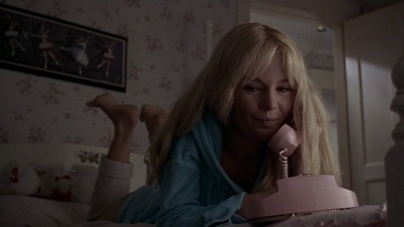
The title of AIP’s Reform School Girl (1957) gives you a pretty good indication of what to expect although fans of the juvenile delinquent film genre may find this one a bit on the tame side. In fact they may find it very much on the tame side.
Seventeen-year-old Donna Price (Gloria Castillo) lives with her aunt and uncle and it’s not a happy life. The uncle keeps making passes at her. Then a double date goes badly wrong for her. Her date, Vince (Edd Byrnes), beats up her uncle and the teenage foursome then head off in a car Vince has stolen. Vince is a big man, in his own mind at least. He thinks he’s a tough guy and tough guys don’t worry about speed limits. Predictably he runs across a local cop who does bother about speed limits, there is a chase and a man is killed. Vince’s tough guy act might not convince most people but it’s enough to intimidate a seventeen-year-old girl. Donna refuses to squeal on Vince (who took off before the police arrived) and as a result she is sent to reform school.
The Hastings School for Girls is full of what 1950s audiences would consider to be tough cookies. Donna does her best to put on a tough act herself but basically she’s just confused and suspicious.
Then along comes idealistic young teacher David Lindsay (Ross Ford). Idealistic young teachers are bad enough but Lindsay is also a psychologist. Being a psychologist it goes without saying that his understanding of human behaviour is basically zero. Lindsay is not merely hopelessly naïve, he is also a bleeding heart, in a big way. He is convinced that the girls need to be treated with kindness and respect. Not surprisingly the girls despise him immediately.
Working in the school’s vegetable garden Donna makes the acquaintance of a local boy, Jackie Dodd (Ralph Reed). This boy arranges a double date for Donna and one of the other girls, Ruth (Jan Englund). How do you arrange a date with girls confined in a reform school? That’s easy. Jackie knows a way to get over the fence.
Mr Lindsay spots Donna heading off to meet Jackie at ten o’clock that night and it gives him an idea. Maybe having dates would be good for the girls? Why not organise a dance for the girls and some of the local girls? The school’s headmistress Mrs Trimble is understandably sceptical but Mr Lindsay convinces her that it would work if it was properly supervised and if the boys were the right sorts of boys. And that should be no problem because naturally the respectable parents of nice boys will be absolutely thrilled by the idea of their sons socialising with reform school trash. The 50s was the beginning of the Age of the Bleeding Heart and Mr Lindsay gets his way.
Things seems to be looking up for Donna but Vince is about to throw a spanner in the works. He’s getting increasingly jumpy, fearing that the police may be about to nab him for the hit-and-run killing. He figures that since the only witness was Donna it might be a good idea to do something about shutting her up for good. His first plan is to make use of one of the girls in the reform school, a girl who was sweet on him for a while, to make Donna appear to be a stool pigeon. That way the other girls will take care of his problem for him.
That plan sets up the sorts of cat-fights that the audience for this type of film would have relished and it does liven up the action for a while at least. When Vince decides to adopt a more direct approach to his problem the stage is set for the exciting climax, which sadly proves to be conspicuously lacking in actual excitement.
Writer-director Edward Bernds had an extremely prolific career in B-movies. He does a competent job here but the story really needed a bit more spice. If you’re going to do a juvenile delinquent movie you might as well make it as sleazy and as outrageously trashy as you can and this one is a bit lacking in both sleaze and trash value.
Gloria Castillo does a decent job as Donna. Edd Byrnes manages to make Vince very creepy and to emphasise the basic cowardice under his tough guy exterior. Ross Ford can’t do anything with the character of Mr Lindsay - he’s just too dull, too earnest, too dedicated, too caring and just generally too irritatingly perfect.
The Region 1 DVD release is barebones but perfectly acceptable.
Reform School Girl is mildly entertaining but it certainly isn’t one of the better 50s juvenile delinquent movies. Worth a rental if you’re a JD movie completist.
Horror, sci-fi, exploitation, erotica, B-movies, art-house films. Vampires, sex, monsters, all the fun stuff.
Sunday, 27 October 2013
Sunday, 20 October 2013
Warlords of Atlantis (1978)
The team of producer John Dark, director Kevin Connor and actor Doug McClure was responsible for Amicus’s very successful 1970s trio of Edgar Rice Burroughs adaptations, The Land that Time Forgot, The People that Time Forgot and At the Earth’s Core. This team combined yet again in 1978 to bring us Warlords of Atlantis, although this time it was not an Amicus production nor was it an Edgar Rice Burroughs adaptation. It does have a rather similar feel to the three earlier movies, although with a few key differences, and in its own way it’s just as much fun
The early sequences of the movie have a very decided feel that would today be described as steampunk. It is 1896 and an ambitious expedition is setting out (on a marvellous steam yacht), their destination - the bottom of the sea!
Professor Aitken (Donald Bisset) is the driving force behind the expedition and he is the one putting up the money. American inventor Greg Collinson (Doug McClure) has designed a rather nifty diving bell. He and the professor’s son Charles (Peter Gilmore) will be the ones making the descent. What Collinson has not been told is the real purpose of the expedition. It is not merely to explore the sea floor. Professor Collinson hopes to find the underwater city of Atlantis. The fact that the professor is an archaeologist probably should have given Collinson the clue that the intention is to find more than just interesting species of fish.
They soon have a remarkable stroke of what seems like good luck but turns out to be very bad luck. They discover an impressive golden statue. This is unfortunate because the crew of the yacht Texas Rose are thoroughly unreliable and are soon infected with gold fever. This is about to cause very serious problems when an even bigger problem comes along - a very large and very unfriendly octopus. When I say very large I mean the octopus is rather bigger than the Texas Rose, and when I say very unfriendly I mean the octopus intends to have both the steam yacht and its crew for lunch. In fact their fate turns out to be less immediately fatal but every bit as disturbing and they find themselves in Atlantis.
At this point the movie takes a rather unexpected turn in a very science fictional direction. The Atlanteans are not an ancient Earth civilisation. They are aliens from outer space. They were stranded on Earth aeons ago and their intention is to leave this planet and find their destiny once more among the stars. Unfortunately in order to achieve this destiny they will have to shape the destiny of Earth, and shape it in a very destructive way.
These alien Atlanteans have various paranormal powers and claim to be incredibly advanced although strangely enough the only weapons they have with which to defend themselves from the incessant attack of an unpleasant array of monsters are muzzle-loading cannons and rifles captured from the inhabitants of the upper world (in other words captured from us).
The Atlanteans have plans for the unlucky crew of the Texas Rose and they have very special plans for Charles Aitken. There’s more at stake than just survival - the future of Earth hangs in the balance. Fortunately the aliens have no idea that they’re up against Doug McClure.
These were the days when special effects meant stop-motion animation, miniatures and matte paintings rather than CGI. These were also the days when movie-makers were not dismayed by limited budgets. They were quite willing to tackle very ambitious projects such as this with seriously limited budgets and more often than you’d expect the final results were quite satisfactory. This movie being a definite case in point. Underwater action, vast underwater cities, battle scenes and monsters (lots of monsters) are among the treats in store for the viewer and by and large they look pretty good.
Peter Gilmore makes a fine secondary hero. Doug McClure is, well he’s Doug McClure. You know what to expect and you won’t be disappointed. Look out for Cyd Charisse as an alien.
By this stage Kevin Connor definitely knew what he was doing with a picture like this. The aim is entertainment and Connor keeps it coming. He wasn’t going to let the low budget bother him and there’s no reason why the audience should either. This movie takes its story just seriously enough. In fact the movie strikes the perfect balance in every department. It throws in a few interesting ideas but never lets them bog the story down.
Studiocanal’s Region 2 DVD offers a reasonable if not outstanding anamorphic transfer without any extras.
The steampunk background is a delight and overall Warlords of Atlantis is splendid entertainment that can be recommended without any reservations.
The early sequences of the movie have a very decided feel that would today be described as steampunk. It is 1896 and an ambitious expedition is setting out (on a marvellous steam yacht), their destination - the bottom of the sea!
Professor Aitken (Donald Bisset) is the driving force behind the expedition and he is the one putting up the money. American inventor Greg Collinson (Doug McClure) has designed a rather nifty diving bell. He and the professor’s son Charles (Peter Gilmore) will be the ones making the descent. What Collinson has not been told is the real purpose of the expedition. It is not merely to explore the sea floor. Professor Collinson hopes to find the underwater city of Atlantis. The fact that the professor is an archaeologist probably should have given Collinson the clue that the intention is to find more than just interesting species of fish.
They soon have a remarkable stroke of what seems like good luck but turns out to be very bad luck. They discover an impressive golden statue. This is unfortunate because the crew of the yacht Texas Rose are thoroughly unreliable and are soon infected with gold fever. This is about to cause very serious problems when an even bigger problem comes along - a very large and very unfriendly octopus. When I say very large I mean the octopus is rather bigger than the Texas Rose, and when I say very unfriendly I mean the octopus intends to have both the steam yacht and its crew for lunch. In fact their fate turns out to be less immediately fatal but every bit as disturbing and they find themselves in Atlantis.
At this point the movie takes a rather unexpected turn in a very science fictional direction. The Atlanteans are not an ancient Earth civilisation. They are aliens from outer space. They were stranded on Earth aeons ago and their intention is to leave this planet and find their destiny once more among the stars. Unfortunately in order to achieve this destiny they will have to shape the destiny of Earth, and shape it in a very destructive way.
These alien Atlanteans have various paranormal powers and claim to be incredibly advanced although strangely enough the only weapons they have with which to defend themselves from the incessant attack of an unpleasant array of monsters are muzzle-loading cannons and rifles captured from the inhabitants of the upper world (in other words captured from us).
The Atlanteans have plans for the unlucky crew of the Texas Rose and they have very special plans for Charles Aitken. There’s more at stake than just survival - the future of Earth hangs in the balance. Fortunately the aliens have no idea that they’re up against Doug McClure.
These were the days when special effects meant stop-motion animation, miniatures and matte paintings rather than CGI. These were also the days when movie-makers were not dismayed by limited budgets. They were quite willing to tackle very ambitious projects such as this with seriously limited budgets and more often than you’d expect the final results were quite satisfactory. This movie being a definite case in point. Underwater action, vast underwater cities, battle scenes and monsters (lots of monsters) are among the treats in store for the viewer and by and large they look pretty good.
Peter Gilmore makes a fine secondary hero. Doug McClure is, well he’s Doug McClure. You know what to expect and you won’t be disappointed. Look out for Cyd Charisse as an alien.
By this stage Kevin Connor definitely knew what he was doing with a picture like this. The aim is entertainment and Connor keeps it coming. He wasn’t going to let the low budget bother him and there’s no reason why the audience should either. This movie takes its story just seriously enough. In fact the movie strikes the perfect balance in every department. It throws in a few interesting ideas but never lets them bog the story down.
Studiocanal’s Region 2 DVD offers a reasonable if not outstanding anamorphic transfer without any extras.
The steampunk background is a delight and overall Warlords of Atlantis is splendid entertainment that can be recommended without any reservations.
Labels:
1970s,
adventure,
lost world movies,
sci-fi,
steampunk
Saturday, 12 October 2013
The Strange Door (1951)
The Strange Door was released by Universal in 1951 and with Boris Karloff as one of the featured stars you might assume this is going to be a horror movie. It isn’t, well not really. It’s more of a gothic adventure movie with just a dash of swashbuckling and just enough horror to spice the dish. Whatever genre it belongs to it’s a highly entertaining little movie.
This production is included in Universal’s Boris Karloff Franchise Collection although as we will see Karloff is not the star.
Denis de Beaulieu (Richard Stapley) is a young nobleman in 18th century France and he’s a bit of a scoundrel. In fact he’s such a ne'er-do-well that his father has disinherited him. He’s the perfect choice for a dastardly plan that the wicked Sire Alain de Maletroit (Charles Laughton) has been cooking up. Denis finds himself set up as a murderer and thus has no choice but to comply with de Maletroit’s scheme. Just to make sure de Maletroit has him kidnapped and imprisoned. The plan is to marry him off to de Maletroit’s niece Blanche (Sally Forrest). At this stage we don’t know exactly what the ultimate object of the scheme is but we’re in no doubt that it’s suitably villainous.
Denis might be a wastrel and a drunkard and an all-round cad but he’s not totally evil. In fact he’s not evil at all. He’s simply young, impetuous and reckless but now that he learns he is to be part of a plot that may endanger both the life and the honour of a charming young lady he suddenly discovers his chivalrous side. He might be wild and irresponsible but he is still a gentleman, and blood will out. He had never imagined himself as a hero but since the rôle is forced upon him he will do the best he can.
The Sire de Maletroit is surrounded by a rather vicious bunch of henchman, the most notable being Corbeau (William Cottrell) and Talon (Michael Pate). His château incorporates all the usual features of a feudal dwelling place including a dungeon and torture chamber which de Maletroit puts to good and frequent use. He has a mysterious prisoner locked up in the dungeon. The servant Voltan (Boris Karloff) knows the secret of the prisoner in the dungeon; in fact Voltan knows a number of secrets.
Denis and Blanche hate each other at first sight. Blanche had hoped to marry a gallant young officer and she considers Denis to be no better than de Maletroit’s ruffians. In time they will both come to revise the hasty opinions they have formed of each other. If they are to foil de Maletroit’s scheme they will need to work together and they will need help, help which comes from an unexpected ally. It all leads up to a splendidly melodramatic finale.
Joseph Pevney is the man in the director’s chair and he handles matters with considerable efficiency. Pevney had the sort of career typical of the honest journeyman director, making a lot of B-features and ending up doing a great deal of television work. A few years after this movie he helmed the very underrated Joan Crawford film noir Female on the Beach. Jerry Sackheim’s screenplay is based on a short story by Robert Louis Stevenson (whose stories often very entertainingly combine gothic and adventure elements).
Boris Karloff has only a supporting part and although he is very good he is not really given the opportunity to stretch his acting wings. The real star is Charles Laughton and he’s in magnificent form. Laughton always relished this kind of part and he makes de Maletroit an outrageously over-the-top melodrama villain. Laughton in full flight was always a joy to watch and he doesn’t hold back.
Richard Stapley (or Richard Wyler as he was also known) makes a fine hero, being equally convincing as the dissipated rake of the first half of the film and the reluctant romantic hero of the second half. Sally Forrest is adequate if rather anaemic. Australian character actor Michael Pate plays a villain as usual, and plays him well.
The movie has the distinctly gothic atmosphere you expect from Universal at this period. They’d been making gothic movies for twenty years by this time and they certainly knew how to do the thing properly. Universal really had no equal when it came to impressively gothic visuals in black-and-white. The sets and costumes are up to their usual high standards as well.
One might take issue with the inclusion of a movie like this in Universal’s Boris Karloff Franchise Collection since Karloff is only a supporting player but the set does give us a chance to see some interesting movies not previously available on DVD. If the other movies are of similar standard to this one then I’ll certainly be well satisfied. There are no extras but the transfer is superb.
The Strange Door is sheer unadulterated fun from beginning to end and can safely be given a very enthusiastic recommendation.
This production is included in Universal’s Boris Karloff Franchise Collection although as we will see Karloff is not the star.
Denis de Beaulieu (Richard Stapley) is a young nobleman in 18th century France and he’s a bit of a scoundrel. In fact he’s such a ne'er-do-well that his father has disinherited him. He’s the perfect choice for a dastardly plan that the wicked Sire Alain de Maletroit (Charles Laughton) has been cooking up. Denis finds himself set up as a murderer and thus has no choice but to comply with de Maletroit’s scheme. Just to make sure de Maletroit has him kidnapped and imprisoned. The plan is to marry him off to de Maletroit’s niece Blanche (Sally Forrest). At this stage we don’t know exactly what the ultimate object of the scheme is but we’re in no doubt that it’s suitably villainous.
Denis might be a wastrel and a drunkard and an all-round cad but he’s not totally evil. In fact he’s not evil at all. He’s simply young, impetuous and reckless but now that he learns he is to be part of a plot that may endanger both the life and the honour of a charming young lady he suddenly discovers his chivalrous side. He might be wild and irresponsible but he is still a gentleman, and blood will out. He had never imagined himself as a hero but since the rôle is forced upon him he will do the best he can.
The Sire de Maletroit is surrounded by a rather vicious bunch of henchman, the most notable being Corbeau (William Cottrell) and Talon (Michael Pate). His château incorporates all the usual features of a feudal dwelling place including a dungeon and torture chamber which de Maletroit puts to good and frequent use. He has a mysterious prisoner locked up in the dungeon. The servant Voltan (Boris Karloff) knows the secret of the prisoner in the dungeon; in fact Voltan knows a number of secrets.
Denis and Blanche hate each other at first sight. Blanche had hoped to marry a gallant young officer and she considers Denis to be no better than de Maletroit’s ruffians. In time they will both come to revise the hasty opinions they have formed of each other. If they are to foil de Maletroit’s scheme they will need to work together and they will need help, help which comes from an unexpected ally. It all leads up to a splendidly melodramatic finale.
Joseph Pevney is the man in the director’s chair and he handles matters with considerable efficiency. Pevney had the sort of career typical of the honest journeyman director, making a lot of B-features and ending up doing a great deal of television work. A few years after this movie he helmed the very underrated Joan Crawford film noir Female on the Beach. Jerry Sackheim’s screenplay is based on a short story by Robert Louis Stevenson (whose stories often very entertainingly combine gothic and adventure elements).
Boris Karloff has only a supporting part and although he is very good he is not really given the opportunity to stretch his acting wings. The real star is Charles Laughton and he’s in magnificent form. Laughton always relished this kind of part and he makes de Maletroit an outrageously over-the-top melodrama villain. Laughton in full flight was always a joy to watch and he doesn’t hold back.
Richard Stapley (or Richard Wyler as he was also known) makes a fine hero, being equally convincing as the dissipated rake of the first half of the film and the reluctant romantic hero of the second half. Sally Forrest is adequate if rather anaemic. Australian character actor Michael Pate plays a villain as usual, and plays him well.
The movie has the distinctly gothic atmosphere you expect from Universal at this period. They’d been making gothic movies for twenty years by this time and they certainly knew how to do the thing properly. Universal really had no equal when it came to impressively gothic visuals in black-and-white. The sets and costumes are up to their usual high standards as well.
One might take issue with the inclusion of a movie like this in Universal’s Boris Karloff Franchise Collection since Karloff is only a supporting player but the set does give us a chance to see some interesting movies not previously available on DVD. If the other movies are of similar standard to this one then I’ll certainly be well satisfied. There are no extras but the transfer is superb.
The Strange Door is sheer unadulterated fun from beginning to end and can safely be given a very enthusiastic recommendation.
Friday, 4 October 2013
The Monkey's Paw (1948)
The Monkey's Paw is a classic short story by W. W. Jacobs that will be familiar to anyone with even a passing interest in horror stories. The 1948 British movie of the same name changes most of the details but it retains the essential core of the story. While it’s deservedly a classic story there are very sound reasons why the movie adaptation was a bad idea from the start. We’ll get to those reasons later.
The story is very simple. The monkey’s paw is a talisman capable of granting three wishes, but if you do make a wish you’ll live to regret it. Or possibly you won’t live. It’s the old “be careful what you wish for” idea.
A dealer in antiques and curios (played by Sydney Taffler) comes across the monkey’s paw in an antique shop. The owner of the shop is reluctant to sell this item, explaining that it can bring only disaster. But the dealer is determined to have it, reasoning that curios with grim stories attached to them will fetch high prices from a certain type of collector.
The monkey’s paw is eventually purchased by Mr Trelawne (Milton Rosmer), a respectable middle-aged shop owner in Cornwall. He has his strong suspicious that making use of the three wishes might be a very unwise thing to do. When he finds himself heavily in debt to his bookmaker he gives in to the temptation to use the paw to get him out of this difficulty. The result of this first wish will lead Trelawne inevitably to the second and truly fateful wish.
Before this happens we see the consequences for a previous possessor of the paw. Kelly, a loquacious but good-natured Irishman and a crony of Trelawne’s, has had some previous connection to the monkey’s paw and knows something of its history.
This unnecessary subplot brings us to the crux of the problem. It’s in the nature of this story that it has to be kept short. It cannot be successfully padded out and any attempt to do so will merely dissipate the impact of the ending. That’s exactly what happens here, and even at a very modest 64 minutes this movie seems rambling and very slow.
A further problem is that the climactic moment of horror is not shown. The makers of the film had their reasons for this. The script (by Norman Lee and Barbara Toy) tries to add its own twist to Jacobs’ twist and this requires the audience not to see the moment of horror. Ordinarily I’m a strong believer in the principle that the most effective horror is the horror we don’t see but merely imagine for ourselves but in this case since the movie relies entirely on the shock ending the viewer is likely to feel a bit cheated.
Norman Lee directed the movie as well as collaborating on the screenplay. Lee made a fairly significant number of second-string movies and does a competent job although this movie really would have benefited from a bit more effort being put into building the atmosphere and the suspense. When you’ve only got one real shock moment in a horror movie you need to build up the audience’s expectations and create the right mood of unease and this movie fails to do these things successfully. As a result it falls rather flat.
Milton Rosmer and Megs Jenkins as Mr and Mrs Trelawne are quite adequate, as is Eric Micklewood as their son Tom. Michael Martin Harvey landed the most colourful role as Kelly who acts as both comic relief and as the crucial character who knows what the outcome will be and predicts it but no-one will listen.
Renown have released this movie on DVD in Region 2 as half of a one-disc two-movie pack, paired with The House in Marsh Road (which is a considerably better movie). The transfers are adequate given the relative obscurity of these movies and it’s a fairly reasonable value-for-money deal.
The Monkey's Paw would have worked a lot better as a half-hour television episode or as a segment of an anthology movie (and it was in fact done fairly well in one of Amicus’s horror anthology movies). There’s just not enough genuine content to make for a successful feature film. It would not be worth buying on its own but since it’s worth buying the DVD to see The House in Marsh Road it’s possibly worth a look on a night when there’s absolutely nothing on the telly and you’re really desperate for entertainment. Generally speaking a rather disappointing British horror movie.
The story is very simple. The monkey’s paw is a talisman capable of granting three wishes, but if you do make a wish you’ll live to regret it. Or possibly you won’t live. It’s the old “be careful what you wish for” idea.
A dealer in antiques and curios (played by Sydney Taffler) comes across the monkey’s paw in an antique shop. The owner of the shop is reluctant to sell this item, explaining that it can bring only disaster. But the dealer is determined to have it, reasoning that curios with grim stories attached to them will fetch high prices from a certain type of collector.
The monkey’s paw is eventually purchased by Mr Trelawne (Milton Rosmer), a respectable middle-aged shop owner in Cornwall. He has his strong suspicious that making use of the three wishes might be a very unwise thing to do. When he finds himself heavily in debt to his bookmaker he gives in to the temptation to use the paw to get him out of this difficulty. The result of this first wish will lead Trelawne inevitably to the second and truly fateful wish.
Before this happens we see the consequences for a previous possessor of the paw. Kelly, a loquacious but good-natured Irishman and a crony of Trelawne’s, has had some previous connection to the monkey’s paw and knows something of its history.
This unnecessary subplot brings us to the crux of the problem. It’s in the nature of this story that it has to be kept short. It cannot be successfully padded out and any attempt to do so will merely dissipate the impact of the ending. That’s exactly what happens here, and even at a very modest 64 minutes this movie seems rambling and very slow.
A further problem is that the climactic moment of horror is not shown. The makers of the film had their reasons for this. The script (by Norman Lee and Barbara Toy) tries to add its own twist to Jacobs’ twist and this requires the audience not to see the moment of horror. Ordinarily I’m a strong believer in the principle that the most effective horror is the horror we don’t see but merely imagine for ourselves but in this case since the movie relies entirely on the shock ending the viewer is likely to feel a bit cheated.
Norman Lee directed the movie as well as collaborating on the screenplay. Lee made a fairly significant number of second-string movies and does a competent job although this movie really would have benefited from a bit more effort being put into building the atmosphere and the suspense. When you’ve only got one real shock moment in a horror movie you need to build up the audience’s expectations and create the right mood of unease and this movie fails to do these things successfully. As a result it falls rather flat.
Milton Rosmer and Megs Jenkins as Mr and Mrs Trelawne are quite adequate, as is Eric Micklewood as their son Tom. Michael Martin Harvey landed the most colourful role as Kelly who acts as both comic relief and as the crucial character who knows what the outcome will be and predicts it but no-one will listen.
Renown have released this movie on DVD in Region 2 as half of a one-disc two-movie pack, paired with The House in Marsh Road (which is a considerably better movie). The transfers are adequate given the relative obscurity of these movies and it’s a fairly reasonable value-for-money deal.
The Monkey's Paw would have worked a lot better as a half-hour television episode or as a segment of an anthology movie (and it was in fact done fairly well in one of Amicus’s horror anthology movies). There’s just not enough genuine content to make for a successful feature film. It would not be worth buying on its own but since it’s worth buying the DVD to see The House in Marsh Road it’s possibly worth a look on a night when there’s absolutely nothing on the telly and you’re really desperate for entertainment. Generally speaking a rather disappointing British horror movie.
Sunday, 29 September 2013
Pretty Poison (1968)
Pretty Poison passed without attracting too much attention when it was released by 20th Century-Fox in 1968 but since then it has deservedly built up a strong cult following. It’s one of the all-time great psycho movies.
Dennis Pitt (Anthony Perkins) has just been released from the mental hospital in which he has been confined for many years, since the tragic death of his aunt in a house fire. A house fire that Dennis started. Dennis is now cured but of course his probation officer, the kindly Morton Azenauer (John Randolph), will still be keeping an eye on him. But Azenauer is confident that Dennis will make it.
Once he is released Dennis drops out of sight and it is a year before Azenauer finally tracks him down to a small town in Massachusetts. Dennis however has a steady job and he has a girlfriend and he seems to be doing pretty well. Azenauer knows he should take Dennis back to the hospital but he knows that would have a devastating effect on Dennis. And he really seems to be managing quite well. Azenauer decides the best thing is to let him stay on in the town although he will of course now be keeping a much closer watch on him.
The girl Dennis has met is Sue Ann Stepanek (Tuesday), a perky and very attractive high school senior. Sue Ann is bright and cheerful and she really takes a shine to the shy and diffident young man. Dennis of course is hopelessly in love. He just can’t believe his luck that a pretty and charming girl like Sue Ann would fall for him.
Part of the attraction on Sue Ann’s part is that Dennis is a lot older and he also has the glamour of being a spy. Dennis works for the CIA. His job at the town’s chemical plant is just a cover. The chemical plant is part of a nefarious plot against the United States. Dennis has been assigned to the case because he’s an experienced agent who has killed a lot of men in the course of duty.
All this is of course a delusion on Dennis’s part. Morton Azenauer is aware of Dennis’s tendency to live in a fantasy world but he thinks that it’s really fairly harmless and that Dennis will gradually adapt himself to the real world.
Does Sue Ann believe Dennis’s story? At first she obviously does believe it. After all she’s an 18-year-old high school girl in a small town. As time goes on she may have started to have her doubts. As she remarks on one occasion, she is surprised the CIA lets him out on his own without a keeper. That’s the essence of the plot. Dennis is the psycho and the sweet normal girl that he meets turns out to be a full-blown psycho herself. Dennis is certainly crazy but Sue Ann has her own brand of craziness going on in her head. It takes Dennis a long time to realise exactly what that something is that is happening in her head.
Dennis and Sue Ann are very happy together, living out Dennis’s fantasy life. Sue Ann craves excitement and the whole secret agent thing is great fun. And what girl wouldn’t enjoy blowing things up? You see Dennis’s mission is to sabotage the chemical plant. He needs an assistant and he promises to ask his CIA controller if Sue Ann can be recruited. It will be a dangerous mission but Sue Ann is willing to accept the risks.
Dennis has always lived happily in his fantasy world all on his own. On his own he can control things. He makes the rules of the games he plays in his mind. He largely ignores the real world. Now he will discover that when you take on a partner you’re not completely in control any more, and eventually a collision may occur between your fantasies and reality. When that happens you’re not in control at all. Dennis doesn’t know it yet but that collision is already on the horizon.
For all his craziness Dennis is actually a kind-hearted gentle young man. He lives in a fantasy world because the real world is too frightened. He’s a scared little boy. And he doesn’t want to hurt anybody. He didn’t even want to hurt his aunt - he was sure she was out of the house when he lit the fire. In his own way he even knows he’s crazy, or at least he has moments when he knows that his fantasies are a game he is playing with himself.
For the first half of the film it is Dennis who is leading Sue Ann into his world of madness and paranoia. He feels in control and at times slips into a slightly condescending attitude, playing at being the man of the world, the man who has done it all and seen it all, the slightly world-weary experienced secret agent. As soon as this madness starts to intersect with the real world, with tragic results, we see a switch-around. Now it is Sue Ann who is doing the leading. And Dennis is now like a frightened puppy who has no choice but to follow his owner.
Much of the success of this movie is dependent on Tuesday Weld. No-one ever doubted Anthony Perkins’ ability to play psychos. To make the story work Weld has to be just as convincing but she has to be convincing as a scary crazy psycho and convincing as a sweet innocent high school senior. It’s a challenging role and Weld rises to the occasion with spectacular success.
By 1968 Anthony Perkins was well and truly pigeon-holed as the go-to guy for psycho roles. He was just so good in those roles. This particular role offers him a few additional challenges. As well as the madness Perkins has to convey Dennis’s vulnerability and his complex view of himself - his ability at times to see that the fantasy is a fantasy while still going on living in it. He has to be both frightening and frightened. And he has to be likeable. Perkins succeeds brilliantly on all counts.
This is a story that lends itself to a black comedy approach and I doubt whether a director today would be able to resist the temptation to play it that way. It is played partially that way but director Noel Black does not allow that tendency to take over completely. The story is essentially a twisted tragedy and the characters need to be taken seriously. Even crazy people feel emotional pain and Black makes sure that we never forget that we are dealing with real people, however unreal their mental worlds may be. Black spent most of his career in television. Pretty Poison is the movie that should have established his reputation but sadly it didn’t happen.
The Region 1 DVD from 20th Century-Fox is barebones but it’s an excellent anamorphic transfer.
Pretty Poison is delightfully twisted with enough kinks in the plot to keep things interesting, complex characters who go beyond the usual movie psycho stereotypes and powerhouse performances by the two leads. A truly superb movie and very highly recommended.
Dennis Pitt (Anthony Perkins) has just been released from the mental hospital in which he has been confined for many years, since the tragic death of his aunt in a house fire. A house fire that Dennis started. Dennis is now cured but of course his probation officer, the kindly Morton Azenauer (John Randolph), will still be keeping an eye on him. But Azenauer is confident that Dennis will make it.
Once he is released Dennis drops out of sight and it is a year before Azenauer finally tracks him down to a small town in Massachusetts. Dennis however has a steady job and he has a girlfriend and he seems to be doing pretty well. Azenauer knows he should take Dennis back to the hospital but he knows that would have a devastating effect on Dennis. And he really seems to be managing quite well. Azenauer decides the best thing is to let him stay on in the town although he will of course now be keeping a much closer watch on him.
The girl Dennis has met is Sue Ann Stepanek (Tuesday), a perky and very attractive high school senior. Sue Ann is bright and cheerful and she really takes a shine to the shy and diffident young man. Dennis of course is hopelessly in love. He just can’t believe his luck that a pretty and charming girl like Sue Ann would fall for him.
Part of the attraction on Sue Ann’s part is that Dennis is a lot older and he also has the glamour of being a spy. Dennis works for the CIA. His job at the town’s chemical plant is just a cover. The chemical plant is part of a nefarious plot against the United States. Dennis has been assigned to the case because he’s an experienced agent who has killed a lot of men in the course of duty.
All this is of course a delusion on Dennis’s part. Morton Azenauer is aware of Dennis’s tendency to live in a fantasy world but he thinks that it’s really fairly harmless and that Dennis will gradually adapt himself to the real world.
Does Sue Ann believe Dennis’s story? At first she obviously does believe it. After all she’s an 18-year-old high school girl in a small town. As time goes on she may have started to have her doubts. As she remarks on one occasion, she is surprised the CIA lets him out on his own without a keeper. That’s the essence of the plot. Dennis is the psycho and the sweet normal girl that he meets turns out to be a full-blown psycho herself. Dennis is certainly crazy but Sue Ann has her own brand of craziness going on in her head. It takes Dennis a long time to realise exactly what that something is that is happening in her head.
Dennis and Sue Ann are very happy together, living out Dennis’s fantasy life. Sue Ann craves excitement and the whole secret agent thing is great fun. And what girl wouldn’t enjoy blowing things up? You see Dennis’s mission is to sabotage the chemical plant. He needs an assistant and he promises to ask his CIA controller if Sue Ann can be recruited. It will be a dangerous mission but Sue Ann is willing to accept the risks.
Dennis has always lived happily in his fantasy world all on his own. On his own he can control things. He makes the rules of the games he plays in his mind. He largely ignores the real world. Now he will discover that when you take on a partner you’re not completely in control any more, and eventually a collision may occur between your fantasies and reality. When that happens you’re not in control at all. Dennis doesn’t know it yet but that collision is already on the horizon.
For all his craziness Dennis is actually a kind-hearted gentle young man. He lives in a fantasy world because the real world is too frightened. He’s a scared little boy. And he doesn’t want to hurt anybody. He didn’t even want to hurt his aunt - he was sure she was out of the house when he lit the fire. In his own way he even knows he’s crazy, or at least he has moments when he knows that his fantasies are a game he is playing with himself.
For the first half of the film it is Dennis who is leading Sue Ann into his world of madness and paranoia. He feels in control and at times slips into a slightly condescending attitude, playing at being the man of the world, the man who has done it all and seen it all, the slightly world-weary experienced secret agent. As soon as this madness starts to intersect with the real world, with tragic results, we see a switch-around. Now it is Sue Ann who is doing the leading. And Dennis is now like a frightened puppy who has no choice but to follow his owner.
Much of the success of this movie is dependent on Tuesday Weld. No-one ever doubted Anthony Perkins’ ability to play psychos. To make the story work Weld has to be just as convincing but she has to be convincing as a scary crazy psycho and convincing as a sweet innocent high school senior. It’s a challenging role and Weld rises to the occasion with spectacular success.
By 1968 Anthony Perkins was well and truly pigeon-holed as the go-to guy for psycho roles. He was just so good in those roles. This particular role offers him a few additional challenges. As well as the madness Perkins has to convey Dennis’s vulnerability and his complex view of himself - his ability at times to see that the fantasy is a fantasy while still going on living in it. He has to be both frightening and frightened. And he has to be likeable. Perkins succeeds brilliantly on all counts.
This is a story that lends itself to a black comedy approach and I doubt whether a director today would be able to resist the temptation to play it that way. It is played partially that way but director Noel Black does not allow that tendency to take over completely. The story is essentially a twisted tragedy and the characters need to be taken seriously. Even crazy people feel emotional pain and Black makes sure that we never forget that we are dealing with real people, however unreal their mental worlds may be. Black spent most of his career in television. Pretty Poison is the movie that should have established his reputation but sadly it didn’t happen.
The Region 1 DVD from 20th Century-Fox is barebones but it’s an excellent anamorphic transfer.
Pretty Poison is delightfully twisted with enough kinks in the plot to keep things interesting, complex characters who go beyond the usual movie psycho stereotypes and powerhouse performances by the two leads. A truly superb movie and very highly recommended.
Tuesday, 24 September 2013
Flight to Mars (1951)
Made in 1951, Flight to Mars was a fairly ambitious effort from Poverty Row studio Monogram. It’s one of the earliest science fiction films to attempt to deal reasonably realistically with space travel, as opposed to the more or less pure fantasy approach of the Buck Rogers and Flash Gordon serials.
The first manned mission from Earth to Mars seems to be progressing fairly successfully until they run into a meteor shower of the kind that would bedevil so many science fiction space missions. Their landing gear is damaged which leaves them with a choice - they can risk a landing on Mars knowing that they may not be able to take off again or they can return to Earth. Being a brave and dedicated lot they elect to go ahead with a crash landing on the red planet.
They land safely enough but their spacecraft suffers so much damage that a return to Earth seems impossible. That is until they meet the Martians. The Martians have a civilisation that is in many ways ahead of Earth’s but oddly enough they have never perfected space travel. They live in vast underground cities and manufacture their own air and water as well as growing crops hydroponically. The Martians seem friendly and anxious to help our space travellers get back to Earth. There are however a few very important things that the astronauts from Earth don’t know about Mars and the Martians. Returning to Earth will not be as easy as they had anticipated.
The plot seems very clichéd today but you have to keep reminding yourself that this movie was made in 1951 and that most of the plot devices that seem hackneyed had not yet become clichés. The spacecraft damaged by a meteor shower, the underground civilisation on Mars, the dying planet scenario with a population needing to find a new home, all these things would have seemed quite fresh to an audience in 1951. While they seem old today they won’t detract from your enjoyment of the movie.
The crew of the Mars mission comprises chief pilot and engineer, Jim Barker (Arthur Franz), a couple of typical science fiction scientists, Professor Jackson (Richard Gaines) and Dr Lain (John Litel), and to add some extra plot interest they are accompanied by Barker’s scientist girlfriend Carol (Virginia Huston) and journalist Steve Abbott (Cameron Mitchell). Jim Barker, his girlfriend and Steve Abbott provide the ingredients for a romantic triangle that provides the movie’s obligatory romance sub-plot. There’s also a beautiful female Martian scientist to add even more romantic complications.
The Martians look completely human which certainly saved perennially budget-conscious Monogram on makeup costs. The Martians have been listening to our radio communications for years so they all speak English, again conveniently simplifying things.
The acting is fairly competent, especially by the standards of Monogram’s very cheap B-movies. Even though his character seems somewhat superfluous to the plot Cameron Mitchell’s undeniable acting chops establish Steve Abbott as the dominant character.
This is civilised space travel, where you can smoke your pipe in peace without anyone hassling you with any silliness about no smoking in the spacecraft.
Director Lesley Selander helmed an enormous number of low-budget movies and while Monogram’s meagre resources and the very tight five-day shooting schedule don’t allow him to do anything fancy he gets the job done. Arthur Strawn’s screenplay doesn’t provide too many surprises but it’s also quite competent.
Monogram did splash out a little by making this movie in colour. The special effects are typical of its era, with wonderfully ’50s Space Age miniatures and lots of matte paintings. The great retro-futuristic costumes add to the enjoyment and the sets are generally not too bad.
The one minor problem I had with this movie was that the ending was a bit rushed. I’m not sure if this was because the print had been cut (possibly cut for length for television transmission) or simply because it was a B-movie and they wanted to wrap things up within a limited running time. It’s not really a major problem though.
The Region 4 DVD is barebones. The transfer is passable for a budget DVD release. The movie was shot in the Academy ratio of 4:3 so the aspect ratio isn’t an issue. The movie looks its age but that will add to the appeal for fans of ’50s sci-fi.
And Flight to Mars is exactly the sort of movie that those fans of ’50s sci-fi love so much. They won’t be disappointed by this one. It’s considerable better than you’d expect from Monogram. Recommended.
The first manned mission from Earth to Mars seems to be progressing fairly successfully until they run into a meteor shower of the kind that would bedevil so many science fiction space missions. Their landing gear is damaged which leaves them with a choice - they can risk a landing on Mars knowing that they may not be able to take off again or they can return to Earth. Being a brave and dedicated lot they elect to go ahead with a crash landing on the red planet.
They land safely enough but their spacecraft suffers so much damage that a return to Earth seems impossible. That is until they meet the Martians. The Martians have a civilisation that is in many ways ahead of Earth’s but oddly enough they have never perfected space travel. They live in vast underground cities and manufacture their own air and water as well as growing crops hydroponically. The Martians seem friendly and anxious to help our space travellers get back to Earth. There are however a few very important things that the astronauts from Earth don’t know about Mars and the Martians. Returning to Earth will not be as easy as they had anticipated.
The plot seems very clichéd today but you have to keep reminding yourself that this movie was made in 1951 and that most of the plot devices that seem hackneyed had not yet become clichés. The spacecraft damaged by a meteor shower, the underground civilisation on Mars, the dying planet scenario with a population needing to find a new home, all these things would have seemed quite fresh to an audience in 1951. While they seem old today they won’t detract from your enjoyment of the movie.
The crew of the Mars mission comprises chief pilot and engineer, Jim Barker (Arthur Franz), a couple of typical science fiction scientists, Professor Jackson (Richard Gaines) and Dr Lain (John Litel), and to add some extra plot interest they are accompanied by Barker’s scientist girlfriend Carol (Virginia Huston) and journalist Steve Abbott (Cameron Mitchell). Jim Barker, his girlfriend and Steve Abbott provide the ingredients for a romantic triangle that provides the movie’s obligatory romance sub-plot. There’s also a beautiful female Martian scientist to add even more romantic complications.
The Martians look completely human which certainly saved perennially budget-conscious Monogram on makeup costs. The Martians have been listening to our radio communications for years so they all speak English, again conveniently simplifying things.
The acting is fairly competent, especially by the standards of Monogram’s very cheap B-movies. Even though his character seems somewhat superfluous to the plot Cameron Mitchell’s undeniable acting chops establish Steve Abbott as the dominant character.
This is civilised space travel, where you can smoke your pipe in peace without anyone hassling you with any silliness about no smoking in the spacecraft.
Director Lesley Selander helmed an enormous number of low-budget movies and while Monogram’s meagre resources and the very tight five-day shooting schedule don’t allow him to do anything fancy he gets the job done. Arthur Strawn’s screenplay doesn’t provide too many surprises but it’s also quite competent.
Monogram did splash out a little by making this movie in colour. The special effects are typical of its era, with wonderfully ’50s Space Age miniatures and lots of matte paintings. The great retro-futuristic costumes add to the enjoyment and the sets are generally not too bad.
The one minor problem I had with this movie was that the ending was a bit rushed. I’m not sure if this was because the print had been cut (possibly cut for length for television transmission) or simply because it was a B-movie and they wanted to wrap things up within a limited running time. It’s not really a major problem though.
The Region 4 DVD is barebones. The transfer is passable for a budget DVD release. The movie was shot in the Academy ratio of 4:3 so the aspect ratio isn’t an issue. The movie looks its age but that will add to the appeal for fans of ’50s sci-fi.
And Flight to Mars is exactly the sort of movie that those fans of ’50s sci-fi love so much. They won’t be disappointed by this one. It’s considerable better than you’d expect from Monogram. Recommended.
Thursday, 19 September 2013
White Zombie (1932)
White Zombie, released in 1932, was one of the first zombie movies. And it remains one of the best.
Neil Parker (John Harron) and his fiancée Madeline (Madge Bellamy) arrive in Haiti where they are to be married. On the ship carrying them to Haiti they had met Charles Beaumont (Robert Frazer). Beaumont had persuaded them to postpone their wedding until they reached Haiti. Beaumont had become besotted by Madeline and now he is determined to have her, no matter what methods he has to adopt. Beaumont asks Monsieur Legendre (Bela Lugosi) to help him. Legendre agrees, but Beaumont is not sure he is prepared to pay Legendre’s price. But eventually Beaumont decides that he will pay any price, even Legendre’s.
Neil and Madeline had already heard rumours of zombies when they first arrived at the island. Missionary Dr Bruner (Joseph Cawthorn) assures Neil that the legends of zombies have some basis in reality. Neil will soon discover just how true that is, when his new bride becomes one of the walking dead.
Beaumont had assumed that he would get Madeline but he is horrified by the zombie Madeline. Legendre has meantime decided he wants Madeline for himself.
Legendre, popularly known as Murder Legendre, has his own private army of zombies. He had learnt the secret of creating zombies from a voodoo witch-doctor. Legendre’s private zombie army is composed entirely of his former enemies, a fact that appeals to Legendre enormously.
Neil gives way to drink and depression but he never entirely gives up hope of restoring Madeline to normality and to himself and he has a powerful ally in Dr Bruner who has a considerable knowledge of local superstition.
Bela Lugosi fans always point to this movie as one of his finest performances, and they are quite right to do so. It’s a good meaty role that suits him perfectly and Lugosi is superb. This is Lugosi at his most charming and at his most sinister and we have no difficulty in believing that he is a man who can exercise a hypnotic control over both the living and the dead.
The other actors are distinctly subsidiary although they’re mostly adequate. Robert Frazer is very melodramatic as Charles Beaumont, which is exactly the kind of performance this movie demands. Madge Bellamy has the right kind of mysterious gothic beauty.
Victor Halperin directed and does a fine job. His brother Edward acted as producer, the movie being made by their own production company. Victor Halperin quite rightly focuses his attention on Lugosi’s mesmeric evil and the close-up shots of Lugosi’s eyes became a major icon of 1930s horror. Halperin consistently creates an atmosphere of stifling tropical evil and his style is pleasingly visually inventive. The movie was made on leased lots at Universal which partly accounts for the high production values.
Garnet Weston wrote the screenplay based on a novel by William B. Seabrook. His screenplay captures the atmosphere of voodoo-ridden Haiti extremely well.
This movie uses matte paintings very effectively. They look artificial and this enhances the nightmare-like quality of the film. The climactic sequences at the castle by the sea are wonderfully atmospheric.
This movie has fallen into the public domain and many of the DVD editions floating about are less than impressive, including the one I saw from an outfit called Payless. While the transfer was a long way from being premium quality it was quite watchable.
This is a good movie anyway but Lugosi’s performance elevates it to the very front rank of 1930s horror movies. This movie is essential viewing for any horror fan and is very highly recommended.
Neil Parker (John Harron) and his fiancée Madeline (Madge Bellamy) arrive in Haiti where they are to be married. On the ship carrying them to Haiti they had met Charles Beaumont (Robert Frazer). Beaumont had persuaded them to postpone their wedding until they reached Haiti. Beaumont had become besotted by Madeline and now he is determined to have her, no matter what methods he has to adopt. Beaumont asks Monsieur Legendre (Bela Lugosi) to help him. Legendre agrees, but Beaumont is not sure he is prepared to pay Legendre’s price. But eventually Beaumont decides that he will pay any price, even Legendre’s.
Neil and Madeline had already heard rumours of zombies when they first arrived at the island. Missionary Dr Bruner (Joseph Cawthorn) assures Neil that the legends of zombies have some basis in reality. Neil will soon discover just how true that is, when his new bride becomes one of the walking dead.
Beaumont had assumed that he would get Madeline but he is horrified by the zombie Madeline. Legendre has meantime decided he wants Madeline for himself.
Legendre, popularly known as Murder Legendre, has his own private army of zombies. He had learnt the secret of creating zombies from a voodoo witch-doctor. Legendre’s private zombie army is composed entirely of his former enemies, a fact that appeals to Legendre enormously.
Neil gives way to drink and depression but he never entirely gives up hope of restoring Madeline to normality and to himself and he has a powerful ally in Dr Bruner who has a considerable knowledge of local superstition.
Bela Lugosi fans always point to this movie as one of his finest performances, and they are quite right to do so. It’s a good meaty role that suits him perfectly and Lugosi is superb. This is Lugosi at his most charming and at his most sinister and we have no difficulty in believing that he is a man who can exercise a hypnotic control over both the living and the dead.
The other actors are distinctly subsidiary although they’re mostly adequate. Robert Frazer is very melodramatic as Charles Beaumont, which is exactly the kind of performance this movie demands. Madge Bellamy has the right kind of mysterious gothic beauty.
Victor Halperin directed and does a fine job. His brother Edward acted as producer, the movie being made by their own production company. Victor Halperin quite rightly focuses his attention on Lugosi’s mesmeric evil and the close-up shots of Lugosi’s eyes became a major icon of 1930s horror. Halperin consistently creates an atmosphere of stifling tropical evil and his style is pleasingly visually inventive. The movie was made on leased lots at Universal which partly accounts for the high production values.
Garnet Weston wrote the screenplay based on a novel by William B. Seabrook. His screenplay captures the atmosphere of voodoo-ridden Haiti extremely well.
This movie uses matte paintings very effectively. They look artificial and this enhances the nightmare-like quality of the film. The climactic sequences at the castle by the sea are wonderfully atmospheric.
This movie has fallen into the public domain and many of the DVD editions floating about are less than impressive, including the one I saw from an outfit called Payless. While the transfer was a long way from being premium quality it was quite watchable.
This is a good movie anyway but Lugosi’s performance elevates it to the very front rank of 1930s horror movies. This movie is essential viewing for any horror fan and is very highly recommended.
Labels:
1930s/40s american horror,
bela lugosi,
gothic horrors,
voodoo,
zombies
Subscribe to:
Posts (Atom)