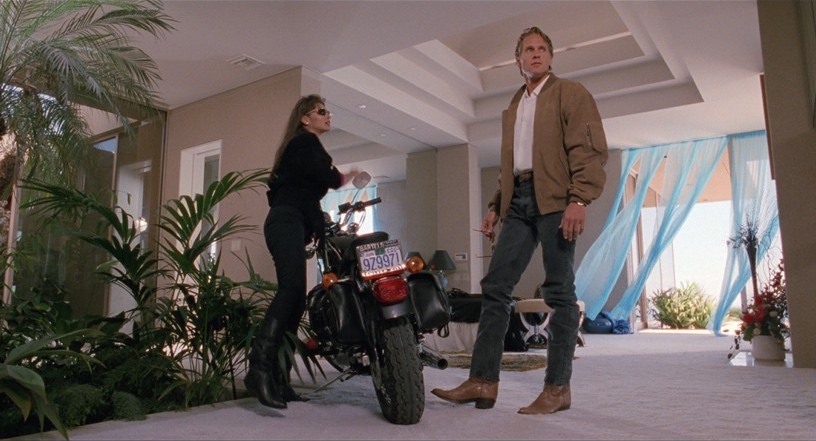
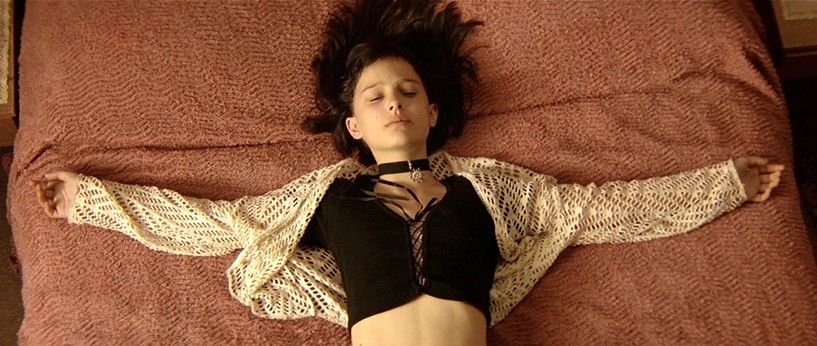
Illicit Dreams is a 1994 erotic thriller starring Shannon Tweed.
Over the past couple of decades quite a few disreputable film genres have been rehabilitated. Even 1970 British sex comedies, once the most despised genre of all, are now available on Blu-Ray, fully restored ad loaded with extras. But there is one film genre that is still regarded as being beyond the pale and totally unworthy of even the smallest respect - 1990s direct-to-video erotic thrillers. You’re still not only allowed to sneer at those - you’re expected to sneer at them.
Shannon Tweed was the queen of the direct-to-video erotic thriller and she’s also regarded as fair game for snarkiness.
Which brings us to Illicit Dreams. Is it really that bad? In my view, no. But it does depend on what you’re expecting from it. We’ll get to that later.
Moira (Shannon Tweed) is married to Daniel Davis (Joe Cortese). He’s a hard-driving rich businessman with powerful political connections. He might wear well-tailored suits but he is really just a slick smooth thug. He treats Moira as a slave. He hits her. He bullies her.
Her friend Melinda (Michelle Johnson) is pushing Moira to divorce Daniel. Melinda means well but it hasn’t occurred to her than Daniel might in fact be genuinely dangerous. Very dangerous.
It’s her dreams that keep Moira going although they also disturb her because they seem so real. She keeps dreaming of a particular man. He’s good-looking and kind and very sexy. She’s never met him, she doesn’t know if he exists, but she loves him.
What Moira doesn’t know is that across town Nick (Andrew Stevens) is having similar dreams, about a woman. The sort of woman he would love to meet. He’s never met her, he doesn’t know if she exists, but he loves her.
The man Moira has been dreaming about is of course Nick. And the woman Nick has been dreaming about is Moira.
Then they meet by accident.
You know that Daniel will find out and that things will get dangerous and nasty. From this point on the movie becomes a fairly straightforward although well-executed erotic thriller. The paranormal elements that make the first half of the movie so interesting get shunted aside. But as an erotic thriller it has some fine suspense and it does get quite tense and exiting towards the end.
And then there’s the ending. I’m not going to risk spoilers by saying any more, except that it left me wanting to hurl a brick at the screen.
Shannon Tweed isn’t the world’s greatest actress but she’s quite good and she’s likeable and sympathetic. Andrew Stevens is a bit dull but he’s OK. Joe Cortese goes way over the top and he’s certainly a memorable and creepy villain.
This was obviously a low-budget movie but it’s slick enough and professional enough and it has a few reasonably effective spooky visual moments.
This is not Citizen Kane. It’s not ground-breaking. It won’t redefine your understanding of cinema. It’s not trying to do any of that. It’s just offering an hour-and-a-half of fairly decent entertainment.
There is some nudity and some sex fairly graphic sex scenes but overall the erotic content is far from excessive.
You might assume that moves such as this, thrillers with added T&A, were aimed mostly at male audiences. Illicit Dreams is however essentially a romance. It’s a paranormal romance. A paranormal steamy romance. Which means that in actuality we’re in serious Chick Flick territory.
Mostly I enjoyed Illicit Dreams, apart from that ending. Recommended, with that caveat.
It’s available on a double-header DVD (paired with another Shannon Tweed flick, Indecent Behavior 4). The transfer is pretty decent. I also highly recommend Shannon Tweed's 1993 movie A Woman Scorned.
Horror, sci-fi, exploitation, erotica, B-movies, art-house films. Vampires, sex, monsters, all the fun stuff.
Showing posts with label neo-noir. Show all posts
Friday, 21 November 2025
Sunday, 22 June 2025
In the Cold of the Night (1990)
In the Cold of the Night is a 1990 erotic thriller directed by and co-written by Nico Mastorakis.
To me this seems to be very much in the style of 80s gialli, especially Nothing Underneath (1985) and Too Beautiful To Die (1988). There’s the same arty/media/fashion world background and the same aura of wealth, glamour, style, sex and decadence. And like Nothing Underneath it has hints of the paranormal.
Scott Bruin (Jeff Lester) is a fashion photographer. He’s rich. He likes women. Lately he’s been having very unsettling dreams. Dreams about murdering a woman. He doesn’t recognise the woman in the dreams. The dreams are becoming very disturbing. At one point he finds himself trying to strangle his bed partner for the night.
And sometimes the dreams come when he’s awake. His vision becomes blurred but he’s definitely awake. Or he thinks he’s awake.
Then he sees the girl’s face on a T-shirt. It’s the girl from his dream. The girl he keeps killing in his dreams.
Then he meets Kimberly (Adrianne Sachs). She rides a motorcycle. She rides it into his studio. Then she takes him to her house. Only it isn’t her house. She’s house-sitting. It’s a palatial mansion, currently on the market for a cool 12 million. She takes him to the house on her bike. She rides the motorcycle right into the bedroom.
And she’s ridden her way into his heart. The sex is great. She’s intelligent and amusing. There’s only one problem. Where did she go to when she got into that BMW? Is there something about her that he doesn’t know?
And he’s still dreaming about killing her. In fact he tries to kill her. She forgives him. It’s just one of those things. He’s probably stressed. She’s a broadminded girl.
Of course he has to follow her the next time she gets into that BMW. Scott doesn’t understand anything that is going on. He just knows that he’s in love with Kimberly.
There’s something strange happening here. Several possibilities will suggest themselves. Scott could be insane. There could be paranormal influences at work. Somebody might be trying to gaslight Scott.
So far the movie is a straightforward erotic thriller with some serious dashes of neo-noir. Then suddenly it doesn’t just change direction. Now it’s on a whole different highway. Every assumption that the viewer has made turns out to be wrong. Every assumption that Scott has made turns out to be wrong. This is not the movie we thought it was. It may belong to a totally different genre.
There are hints in the early part of the movie as to what is really going on but you’ll probably overlook them because the direction in which they point is so crazy you won’t seriously entertain it. Mastorakis is actually being very clever here - he’s using our genre expectations against us.
The movie’s wild crazy change of direction is what I love about it. It’s the sort of thing I wasn’t expecting in a modestly budgeted direct-to-video movie. It’s more what I would have expected from a 1960s European movie, or maybe from someone like Brian De Palma. And, amusingly, there is a direct Brian De Palma reference in this movie. It won’t help you to figure out what’s going on because Mastorakis isn’t riffing on any particular De Palma movie but he is perhaps being a bit De Palma-esque.
Jess Lester as Scott is perhaps the weak link here. He’s a bit dull but he does do the “deer caught in the headlights” thing quite well and he does give the impression that Scott might be dangerous of pushed over the edge. Lester is reasonably OK.
Adrianne Sachs is OK as Kimberly. She does a fair job of making her enigmatic. Shannon Tweed is fine in a minor role.
For a direct-to-video the production values are high. It has that wonderful aesthetic of 80s excess. The atmosphere of wealth, glamour and decadence works well.
As I mentioned at the beginning it has a similar vibe to two great 80s gialli, Nothing Underneath and Too Beautiful To Die.
In the Cold of the Night is stylish, polished and well-made. It’s fast-paced, crazy and unpredictable. It’s very sexy, with some raunchy sex scenes. That’s the sort of thing that seem to unleash the snarkiness in a lot of reviewers. Which is a pity. It’s an erotic thriller. It’s supposed to be erotic. It is. I enjoyed this movie a whole lot. Highly recommended.
Scott Bruin (Jeff Lester) is a fashion photographer. He’s rich. He likes women. Lately he’s been having very unsettling dreams. Dreams about murdering a woman. He doesn’t recognise the woman in the dreams. The dreams are becoming very disturbing. At one point he finds himself trying to strangle his bed partner for the night.
And sometimes the dreams come when he’s awake. His vision becomes blurred but he’s definitely awake. Or he thinks he’s awake.
Then he sees the girl’s face on a T-shirt. It’s the girl from his dream. The girl he keeps killing in his dreams.
Then he meets Kimberly (Adrianne Sachs). She rides a motorcycle. She rides it into his studio. Then she takes him to her house. Only it isn’t her house. She’s house-sitting. It’s a palatial mansion, currently on the market for a cool 12 million. She takes him to the house on her bike. She rides the motorcycle right into the bedroom.
And she’s ridden her way into his heart. The sex is great. She’s intelligent and amusing. There’s only one problem. Where did she go to when she got into that BMW? Is there something about her that he doesn’t know?
And he’s still dreaming about killing her. In fact he tries to kill her. She forgives him. It’s just one of those things. He’s probably stressed. She’s a broadminded girl.
Of course he has to follow her the next time she gets into that BMW. Scott doesn’t understand anything that is going on. He just knows that he’s in love with Kimberly.
There’s something strange happening here. Several possibilities will suggest themselves. Scott could be insane. There could be paranormal influences at work. Somebody might be trying to gaslight Scott.
So far the movie is a straightforward erotic thriller with some serious dashes of neo-noir. Then suddenly it doesn’t just change direction. Now it’s on a whole different highway. Every assumption that the viewer has made turns out to be wrong. Every assumption that Scott has made turns out to be wrong. This is not the movie we thought it was. It may belong to a totally different genre.
There are hints in the early part of the movie as to what is really going on but you’ll probably overlook them because the direction in which they point is so crazy you won’t seriously entertain it. Mastorakis is actually being very clever here - he’s using our genre expectations against us.
The movie’s wild crazy change of direction is what I love about it. It’s the sort of thing I wasn’t expecting in a modestly budgeted direct-to-video movie. It’s more what I would have expected from a 1960s European movie, or maybe from someone like Brian De Palma. And, amusingly, there is a direct Brian De Palma reference in this movie. It won’t help you to figure out what’s going on because Mastorakis isn’t riffing on any particular De Palma movie but he is perhaps being a bit De Palma-esque.
Jess Lester as Scott is perhaps the weak link here. He’s a bit dull but he does do the “deer caught in the headlights” thing quite well and he does give the impression that Scott might be dangerous of pushed over the edge. Lester is reasonably OK.
Adrianne Sachs is OK as Kimberly. She does a fair job of making her enigmatic. Shannon Tweed is fine in a minor role.
For a direct-to-video the production values are high. It has that wonderful aesthetic of 80s excess. The atmosphere of wealth, glamour and decadence works well.
As I mentioned at the beginning it has a similar vibe to two great 80s gialli, Nothing Underneath and Too Beautiful To Die.
In the Cold of the Night is stylish, polished and well-made. It’s fast-paced, crazy and unpredictable. It’s very sexy, with some raunchy sex scenes. That’s the sort of thing that seem to unleash the snarkiness in a lot of reviewers. Which is a pity. It’s an erotic thriller. It’s supposed to be erotic. It is. I enjoyed this movie a whole lot. Highly recommended.
Thursday, 5 June 2025
Lost Highway (1997)
Lost Highway is a 1997 David Lynch film that received a mixed reception at the time.
It certainly establishes a weird disturbing atmosphere right from the start. Everything is normal, and also somehow wrong. We see a house. Everything is as it should be but it’s oddly disturbing.
We meet jazz musician Fred Madison (Bill Pullman). He has a very attractive wife, Renee (Patricia Arquette). It seems like an ordinary marriage. Then we see them making love. That’s normal but the music on the soundtrack is spectacularly inappropriate. It wouldn’t matter what kind of sex scene this was, whether it was romantic or sleazy or desperate or passionate, this music would be spectacularly inappropriate. Lynch is trying to make us see perfectly ordinary things as weird and unsettling.
They keep getting videotapes in the mail. It seems that somebody has been filming them, inside their own house. This creeps them out, naturally.
Then we see Fred walking into a strange hall of darkness. This is a David Lynch movie. It could be a portal to another reality, or a portal from one dream world to another.
Fred finds himself convicted of murder. He is on Death Row.
The guards get a shock when they check his cell. He has gone. There’s another guy in the call, a guy who should not be there. This guy is a young punk named Pete Dayton, a guy who is pretty harmless. Pete has not done anything. No-one knows how he got into the cell.
So where has Fred gone? Good question. We’re now following Pete’s story.
Pete has a girlfriend, Sheila. They have lots of hot sex.
Pete is mixed up in some ways with an ageing big time gangster, Mr Eddy. Mr Eddy is terrifyingly violent. He could give lessons to Frank Booth. Mr Eddy has a gorgeous young blonde mistress, Alice Wakefield. The sexual sparks are immediately flying between Pete and Alice. They begin a wild sexual affair. If Mr Eddy finds out they’re both dog food.
Shortly thereafter the movie begins to make less sense. It makes less sense every minute.
There’s lots of incredibly brutal violence. I’m not a fan of excessive violence but I’m open-minded about it. If it’s your thing that’s fine. There’s lots of steamy sex. And Lynch does erotic scenes quite well - sexy but a bit edgy.
Lynch indulged in plenty of weirdness in Blue Velvet and Wild at Heart and those films also challenged the viewer to question the reality of reality. But they had some coherence. They engaged the viewer’s interest. There was a reason to keep watching.
Lost Highway is in some ways a step backwards to the incomprehensible weirdness for its own sake of Eraserhead. If you loved Eraserhead you’ll probably love Lost Highway. If like me you hated Eraserhead then you might consider Lost Highway to be 134 minutes of soul-crushing tedium.
There’s lot of spooky surreal crazy stuff but since there’s nothing happening in the movie that we could possibly care about those moments come across as self-indulgence.
We cannot be sure of the identity of any of the characters. They do not seem to have fixed identities. They have no personalities. We do not know why they do any of the things they do. All of which makes this movie exciting to film school types. When talking about the movie they get to use the words subversive and transgressive a lot and that makes them very happy.
Lynch loves bad acting. Given that his films do not take place in the real world and that his characters are probably not real people that perhaps makes some sense. It obviously makes sense to David Lynch. This time he has excelled himself, assembling a cast of breathtakingly bad actors.
The interesting thing about Lost Highway is that as it gets weirder it gets less disturbing. Things disturb us when they threaten our belief in a stable ordered world of reality. But when the movie abandons even the slightest connection to reality we cease to be disturbed because we no longer care.
There is a way of interpreting this movie that makes perfect sense but the trouble is that it can make you cease to care about anything that happens. Of course there are other possible interpretations that avoid that pitfall but to me they’re not as convincing as the simple interpretation.
This is a much bleaker much more nihilistic film than either Blue Velvet or Wild at Heart. Watching it is a gruelling experience. I personally prefer Blue Velvet and Wild at Heart because they don’t take the easy option of embracing despair and nihilism.
I can see plenty of things to admire in Lost Highway but I have to say I did not really enjoy it. It just didn’t grab me. But it’s one of Lynch’s key films and most Lynch fans like it much more than I did and for those reasons it’s recommended.
I’ve also reviewed Wild at Heart (1990) and Blue Velvet (1986) which I personally consider to be Lynch’s two masterpieces.
It certainly establishes a weird disturbing atmosphere right from the start. Everything is normal, and also somehow wrong. We see a house. Everything is as it should be but it’s oddly disturbing.
We meet jazz musician Fred Madison (Bill Pullman). He has a very attractive wife, Renee (Patricia Arquette). It seems like an ordinary marriage. Then we see them making love. That’s normal but the music on the soundtrack is spectacularly inappropriate. It wouldn’t matter what kind of sex scene this was, whether it was romantic or sleazy or desperate or passionate, this music would be spectacularly inappropriate. Lynch is trying to make us see perfectly ordinary things as weird and unsettling.
They keep getting videotapes in the mail. It seems that somebody has been filming them, inside their own house. This creeps them out, naturally.
Then we see Fred walking into a strange hall of darkness. This is a David Lynch movie. It could be a portal to another reality, or a portal from one dream world to another.
Fred finds himself convicted of murder. He is on Death Row.
The guards get a shock when they check his cell. He has gone. There’s another guy in the call, a guy who should not be there. This guy is a young punk named Pete Dayton, a guy who is pretty harmless. Pete has not done anything. No-one knows how he got into the cell.
So where has Fred gone? Good question. We’re now following Pete’s story.
Pete has a girlfriend, Sheila. They have lots of hot sex.
Pete is mixed up in some ways with an ageing big time gangster, Mr Eddy. Mr Eddy is terrifyingly violent. He could give lessons to Frank Booth. Mr Eddy has a gorgeous young blonde mistress, Alice Wakefield. The sexual sparks are immediately flying between Pete and Alice. They begin a wild sexual affair. If Mr Eddy finds out they’re both dog food.
Shortly thereafter the movie begins to make less sense. It makes less sense every minute.
There’s lots of incredibly brutal violence. I’m not a fan of excessive violence but I’m open-minded about it. If it’s your thing that’s fine. There’s lots of steamy sex. And Lynch does erotic scenes quite well - sexy but a bit edgy.
Lynch indulged in plenty of weirdness in Blue Velvet and Wild at Heart and those films also challenged the viewer to question the reality of reality. But they had some coherence. They engaged the viewer’s interest. There was a reason to keep watching.
Lost Highway is in some ways a step backwards to the incomprehensible weirdness for its own sake of Eraserhead. If you loved Eraserhead you’ll probably love Lost Highway. If like me you hated Eraserhead then you might consider Lost Highway to be 134 minutes of soul-crushing tedium.
There’s lot of spooky surreal crazy stuff but since there’s nothing happening in the movie that we could possibly care about those moments come across as self-indulgence.
We cannot be sure of the identity of any of the characters. They do not seem to have fixed identities. They have no personalities. We do not know why they do any of the things they do. All of which makes this movie exciting to film school types. When talking about the movie they get to use the words subversive and transgressive a lot and that makes them very happy.
Lynch loves bad acting. Given that his films do not take place in the real world and that his characters are probably not real people that perhaps makes some sense. It obviously makes sense to David Lynch. This time he has excelled himself, assembling a cast of breathtakingly bad actors.
The interesting thing about Lost Highway is that as it gets weirder it gets less disturbing. Things disturb us when they threaten our belief in a stable ordered world of reality. But when the movie abandons even the slightest connection to reality we cease to be disturbed because we no longer care.
There is a way of interpreting this movie that makes perfect sense but the trouble is that it can make you cease to care about anything that happens. Of course there are other possible interpretations that avoid that pitfall but to me they’re not as convincing as the simple interpretation.
This is a much bleaker much more nihilistic film than either Blue Velvet or Wild at Heart. Watching it is a gruelling experience. I personally prefer Blue Velvet and Wild at Heart because they don’t take the easy option of embracing despair and nihilism.
I can see plenty of things to admire in Lost Highway but I have to say I did not really enjoy it. It just didn’t grab me. But it’s one of Lynch’s key films and most Lynch fans like it much more than I did and for those reasons it’s recommended.
I’ve also reviewed Wild at Heart (1990) and Blue Velvet (1986) which I personally consider to be Lynch’s two masterpieces.
Saturday, 31 May 2025
Dream Lover (1993)
Dream Lover is a 1993 erotic thriller, made at a time when erotic thrillers and neo-noirs were all the rage. This movie fits into both these categories,
Ray (James Spader) is a successful architect, newly divorced. The whole dating thing is a bit new and bewildering to him. His buddy Norman keeps trying to fix him up with women but they’re all so obviously wrong that they don’t even get to first base with Ray. Then at a party he spills wine all over Lena’s new dress. He has never met Lena (Mädchen Amick) before. The next day, quite by accident, he runs into Lena at the supermarket and they end up having dinner. She’s friendly and at the same time she’s pushing him away. They just have dinner, no more than that.
Ray is certainly not a loser. He’s just a but vulnerable at this moment, and the loneliness is just starting to get to him. He’s not exactly desperate but he really is strangely attracted to this girl and he’s not giving up.
They sleep together and that’s it for Ray. He’s fallen for her big time. He’s that kind of guy, He’s a romantic.
Pretty soon they’re married. It’s like a dream come true. He still gets on well with his first wife but they were never right for each other. It’s not like that with Lena. They’re perfect for each other.
And they have a child and the perfect marriage is still perfect.
It all seems like a very straightforward romance story. Except for the dreams Ray has. Slightly unsettling dreams about a carnival.
And there are little things. Right from the start Lena occasionally reacts in slightly odd ways. She doesn’t like to talk about her childhood. Things are not really happening between them in the bedroom any more. There are clues. Subtle clues. They’re probably nothing. But sometimes husbands do get suspicious about little things.
The problem is that he has no idea what it is that he suspects. And the viewer has no idea either. It might not be such a big deal. It’s just these odd little things that are not quite right.
I’m not going to say any more about the plot for fear of revealing spoilers, other than the fact that at this point the plot really gets moving and the movie changes gears.
Ray is a nice guy. He’s not exactly dumb but he is a romantic. His life has always run smoothly. As far as Ray is concerned the world is a place where everything makes sense. He knows that people are not perfect but he thinks that mostly they’re OK and that their actions makes sense. He has never encountered any problem he couldn’t handle. He’s obviously had a good upbringing, he’s successful, he has money. He’s been sheltered from the seamy unpleasant side of life.
I can’t say very much at all about the acting performances because that would also risk spoilers, other than to say that James Spader and Mädchen Amick are both very impressive.
There are three women who play key roles - Lena, Ray’s first wife Martha (Kathleen York) and Ray’s lawyer Elaine (Bess Armstrong).
This is Nicholas Kazan’s only feature film as director. He also wrote the screenplay and seems to have had a modestly successful career as a screenwriter. His screenplay here is quite ambitious.
Is this a neo-noir? I think it is. It involves a protagonist led along the path to destruction by a character flaw, and the flaw is an interesting one - a willingness to be deceived.
One of the three women turns out to be a definite femme fatale (and an interesting one) so there’s definitely enough here to justify the neo-noir label.
The dream sequences are an interesting touch. They have a very slight David Lynchian feel. They are unsettling. They’re puzzling but they do eventually make a kind of sense.
This is a movie that is often treated rather dismissively on the grounds that the plot involves wild implausibilities. I suspect that most reviewers have failed to consider that those dream sequences might be there for a reason. They might be crucial. They might even be the most important parts of the movie. I’m amazed that anyone could assume that they’ve just been thrown in for no reason at all.
I’m not going to tell you what I think is going on because I’m not certain, and that’s what I like most about this movie. There’s the possibility that it’s not as straightforward as it seems to be.
I liked Dream Lover a lot. Highly recommended.
Ray (James Spader) is a successful architect, newly divorced. The whole dating thing is a bit new and bewildering to him. His buddy Norman keeps trying to fix him up with women but they’re all so obviously wrong that they don’t even get to first base with Ray. Then at a party he spills wine all over Lena’s new dress. He has never met Lena (Mädchen Amick) before. The next day, quite by accident, he runs into Lena at the supermarket and they end up having dinner. She’s friendly and at the same time she’s pushing him away. They just have dinner, no more than that.
Ray is certainly not a loser. He’s just a but vulnerable at this moment, and the loneliness is just starting to get to him. He’s not exactly desperate but he really is strangely attracted to this girl and he’s not giving up.
They sleep together and that’s it for Ray. He’s fallen for her big time. He’s that kind of guy, He’s a romantic.
Pretty soon they’re married. It’s like a dream come true. He still gets on well with his first wife but they were never right for each other. It’s not like that with Lena. They’re perfect for each other.
And they have a child and the perfect marriage is still perfect.
It all seems like a very straightforward romance story. Except for the dreams Ray has. Slightly unsettling dreams about a carnival.
And there are little things. Right from the start Lena occasionally reacts in slightly odd ways. She doesn’t like to talk about her childhood. Things are not really happening between them in the bedroom any more. There are clues. Subtle clues. They’re probably nothing. But sometimes husbands do get suspicious about little things.
The problem is that he has no idea what it is that he suspects. And the viewer has no idea either. It might not be such a big deal. It’s just these odd little things that are not quite right.
I’m not going to say any more about the plot for fear of revealing spoilers, other than the fact that at this point the plot really gets moving and the movie changes gears.
Ray is a nice guy. He’s not exactly dumb but he is a romantic. His life has always run smoothly. As far as Ray is concerned the world is a place where everything makes sense. He knows that people are not perfect but he thinks that mostly they’re OK and that their actions makes sense. He has never encountered any problem he couldn’t handle. He’s obviously had a good upbringing, he’s successful, he has money. He’s been sheltered from the seamy unpleasant side of life.
I can’t say very much at all about the acting performances because that would also risk spoilers, other than to say that James Spader and Mädchen Amick are both very impressive.
There are three women who play key roles - Lena, Ray’s first wife Martha (Kathleen York) and Ray’s lawyer Elaine (Bess Armstrong).
This is Nicholas Kazan’s only feature film as director. He also wrote the screenplay and seems to have had a modestly successful career as a screenwriter. His screenplay here is quite ambitious.
Is this a neo-noir? I think it is. It involves a protagonist led along the path to destruction by a character flaw, and the flaw is an interesting one - a willingness to be deceived.
One of the three women turns out to be a definite femme fatale (and an interesting one) so there’s definitely enough here to justify the neo-noir label.
The dream sequences are an interesting touch. They have a very slight David Lynchian feel. They are unsettling. They’re puzzling but they do eventually make a kind of sense.
This is a movie that is often treated rather dismissively on the grounds that the plot involves wild implausibilities. I suspect that most reviewers have failed to consider that those dream sequences might be there for a reason. They might be crucial. They might even be the most important parts of the movie. I’m amazed that anyone could assume that they’ve just been thrown in for no reason at all.
I’m not going to tell you what I think is going on because I’m not certain, and that’s what I like most about this movie. There’s the possibility that it’s not as straightforward as it seems to be.
I liked Dream Lover a lot. Highly recommended.
Monday, 19 May 2025
Femme Fatale (2002)
Femme Fatale is a 2002 erotic thriller (with a very strong neo-noir vibe) written and directed by Brian De Palma. It was a box-office flop at the time although it now has a strong cult following and its reputation has grown considerably. It’s one of my favourite De Palma movies. It’s so very De Palma.
It may simply have mystified and exasperated some people. It takes some wild risks. Whether they pay off or not is something you will have to decide. It depends on your tolerance for thrillers that break the rules.
The most important aspect of this movie is the one that can’t even be hinted at. You do not want to read any spoilers for Femme Fatale. I am not going to offer hints at all. Naturally most online reviewers go ahead and spoil the movie anyway so you may want to avoid them before seeing the movie.
What I will say is that you do need to pay attention when watching this movie. There are things you should be noticing.
It begins with a daring jewel heist during the Cannes Film Festival. The jewels are in the form of a snake brassiere worn by a supermodel. Sexy Laure (Rebecca Romijn) steals the jewels while having sex with the supermodel in the ladies’ room. The heist is a spectacular extended visual set-piece with very little dialogue. When it comes to sheer mastery of technique De Palma has never done anything better. Then we get a chase of sorts, or maybe it’s a stalking, and it’s done as another impressive visual set-piece.
Laure figures she’d be wise to get out of France. Start a new life somewhere. Which she does. That’s going fine until down-at-heel paparazzo Nicolas Bardo (Antonio Banderas) snaps her picture. Laure cannot afford to have any photographs of herself. Much too dangerous.
Then the twists start to kick in. Nicolas thinks he’s the knight in shining armour rescuing a damsel in distress. It takes him quite a while to realise that Laure is not a damsel in distress. She’s a psycho bitch. She’s a femme fatale on steroids.
Nicolas is in the spider’s web now. More plot twists follow, before the really big plot twist.
When the so-called New American Cinema burst onto the scene round 1967 it saw itself, like the French Nouvelle Vague, the British New Wave and the New German Cinema, as a revolutionary movement that would sweep away the past and create something totally new. Tradition was something that needed to be scrapped. It was all very adolescent.
Brian De Palma made his first feature film in 1968 but I think it’s clear that that was never his attitude. De Palma saw himself as part of a living tradition of filmmaking. He didn’t want to scrap that tradition. He wanted to be part of it.
Of course his admiration for Hitchcock was part of this. But he didn’t see Hitchcock’s body of work as a resource to be plundered. He had seen Hitchcock’s movies. He understood them. He understood Hitchcock’s methods. He has absorbed them. He then set out to make Brian De Palma movies, making use of the lessons he had learnt from Hitchcock and other masters of the past. Sure, he liked to include Hitchcock homages but they were clever and witty and his movies were always Brian De Palma movies.
He lays his cards on the table right at the start of Femme Fatale. We see a woman watching Double Indemnity on TV. We know that we’re about to see a movie that draws on the filmmaking tradition that produced movies like Double Indemnity.
There’s lots of voyeurism in this movie. With a hero who is a photographer and a photograph as a key plot element that’s to be expected and voyeurism is a theme that De Palma knew how to handle. At times in this movie there are multiple voyeurs. Lots of people are watching Laure.
You want wild crazy camera angles? You got ’em. And lots of very cool overhead shots. You want split screens? You got them too. And naturally split diopter shots. De Palma could get away with things like this. This is a De Palma film so naturally it is very much an exercise in style and it really does have insane amounts of style.
Laure (Rebecca Romijn) is very sexy and very wicked. De Palma doesn’t stint on the eroticism.
Antonio Banderas is very good and very sympathetic, playing a nice guy who is just getting more and more out of his depth.
As for the element I can’t talk about, whether it works or not is up to the viewer to decide. It’s something that has been done before but then De Palma adds some extra twists.
This is one of those movies that is worth rewatching. The second time around you’ll be seeing everything in a radically different way and you’ll be able to appreciate the way De Palma never actually cheats.
Femme Fatale is definitely a neo-noir but it’s a lot more than that. Very highly recommended.
Femme Fatale looks great on Blu-Ray. The Blu-Ray extras are, surprisingly, very worthwhile but do not under any circumstances watch the featurettes before you watch the movie. They contain a whole bunch of spoilers.
It may simply have mystified and exasperated some people. It takes some wild risks. Whether they pay off or not is something you will have to decide. It depends on your tolerance for thrillers that break the rules.
The most important aspect of this movie is the one that can’t even be hinted at. You do not want to read any spoilers for Femme Fatale. I am not going to offer hints at all. Naturally most online reviewers go ahead and spoil the movie anyway so you may want to avoid them before seeing the movie.
What I will say is that you do need to pay attention when watching this movie. There are things you should be noticing.
It begins with a daring jewel heist during the Cannes Film Festival. The jewels are in the form of a snake brassiere worn by a supermodel. Sexy Laure (Rebecca Romijn) steals the jewels while having sex with the supermodel in the ladies’ room. The heist is a spectacular extended visual set-piece with very little dialogue. When it comes to sheer mastery of technique De Palma has never done anything better. Then we get a chase of sorts, or maybe it’s a stalking, and it’s done as another impressive visual set-piece.
Laure figures she’d be wise to get out of France. Start a new life somewhere. Which she does. That’s going fine until down-at-heel paparazzo Nicolas Bardo (Antonio Banderas) snaps her picture. Laure cannot afford to have any photographs of herself. Much too dangerous.
Then the twists start to kick in. Nicolas thinks he’s the knight in shining armour rescuing a damsel in distress. It takes him quite a while to realise that Laure is not a damsel in distress. She’s a psycho bitch. She’s a femme fatale on steroids.
Nicolas is in the spider’s web now. More plot twists follow, before the really big plot twist.
When the so-called New American Cinema burst onto the scene round 1967 it saw itself, like the French Nouvelle Vague, the British New Wave and the New German Cinema, as a revolutionary movement that would sweep away the past and create something totally new. Tradition was something that needed to be scrapped. It was all very adolescent.
Brian De Palma made his first feature film in 1968 but I think it’s clear that that was never his attitude. De Palma saw himself as part of a living tradition of filmmaking. He didn’t want to scrap that tradition. He wanted to be part of it.
Of course his admiration for Hitchcock was part of this. But he didn’t see Hitchcock’s body of work as a resource to be plundered. He had seen Hitchcock’s movies. He understood them. He understood Hitchcock’s methods. He has absorbed them. He then set out to make Brian De Palma movies, making use of the lessons he had learnt from Hitchcock and other masters of the past. Sure, he liked to include Hitchcock homages but they were clever and witty and his movies were always Brian De Palma movies.
He lays his cards on the table right at the start of Femme Fatale. We see a woman watching Double Indemnity on TV. We know that we’re about to see a movie that draws on the filmmaking tradition that produced movies like Double Indemnity.
There’s lots of voyeurism in this movie. With a hero who is a photographer and a photograph as a key plot element that’s to be expected and voyeurism is a theme that De Palma knew how to handle. At times in this movie there are multiple voyeurs. Lots of people are watching Laure.
You want wild crazy camera angles? You got ’em. And lots of very cool overhead shots. You want split screens? You got them too. And naturally split diopter shots. De Palma could get away with things like this. This is a De Palma film so naturally it is very much an exercise in style and it really does have insane amounts of style.
Laure (Rebecca Romijn) is very sexy and very wicked. De Palma doesn’t stint on the eroticism.
Antonio Banderas is very good and very sympathetic, playing a nice guy who is just getting more and more out of his depth.
As for the element I can’t talk about, whether it works or not is up to the viewer to decide. It’s something that has been done before but then De Palma adds some extra twists.
This is one of those movies that is worth rewatching. The second time around you’ll be seeing everything in a radically different way and you’ll be able to appreciate the way De Palma never actually cheats.
Femme Fatale is definitely a neo-noir but it’s a lot more than that. Very highly recommended.
Femme Fatale looks great on Blu-Ray. The Blu-Ray extras are, surprisingly, very worthwhile but do not under any circumstances watch the featurettes before you watch the movie. They contain a whole bunch of spoilers.
Wednesday, 14 May 2025
Wild at Heart (1990)
Wild at Heart was David Lynch’s next feature film after Blue Velvet. Blue Velvet was not exactly a conventional Hollywood movie. Wild at Heart is much weirder. Lynch had clearly decided that he wasn’t even going to go through the motions of conforming to conventional ideas about movie-making. He was setting off on his own path and if you wanted to follow him that was up to you.
I rewatched Blue Velvet recently and came to the conclusion that if you think you understand that movie that is proof positive that you don’t understand it. In fact if you’re trying to understand it in any kind of rational logical way then you’ve missed the point entirely. That applies even more strongly to Wild at Heart. That does not imply that these movies don’t mean anything. They mean a great deal, but as soon as you think you’ve pinned down the meanings in a neat tidy way those meanings slip away from you. The meanings can change from one viewing to another. Your idea of what Wild at Heart means might differ radically from mine but we can both be right.
It’s amusing to see people describing Wild at Heart as some kind of homage to film noir.
The numerous references scattered throughout the movie to The Wizard of Oz make it clear that this is a movie with zero pretensions to realism. It’s a fantasy movie. In fact it’s a fairy tale movie. Once upon a time a young man named Sailor (Nicolas Cage) fell in love with a beautiful princess named Lula (Laura Dern). Her evil stepmother tried to keep them apart. The evil stepmother is jealous of Lula’s beauty and goodness. The young man has to fight ogres and monsters to prove his love. The young man and the princess are stalked by the Wicked Witch of the West. But although he doesn’t know it the Good Witch of the North is watching over him.
Only in this case the young man is a two-bit loser serving a stretch for manslaughter. The beautiful princess is a crazy chick obsessed with sex. The evil stepmother is Lula’s mother Marietta (Diane Ladd) who wants to have sex with Sailor. The ogres and monsters are assorted gangsters and hoodlums and psychos. But the Wicked Witch of the West really is stalking them. Lula has seen her. And the Good Witch of the North really is keeping an eye on them.
It is pointless to fret about the fact that the characters in David Lynch movies are not believable. They’re not supposed to be. They’re fairy tale characters. It’s pointless to worry about plot incoherence. This is a fantasy story.
It’s also impossible to judge the acting by normal standards. By any conventional standards all of the acting performances are ludicrously atrocious. But they’re just right for a David Lynch movie.
The characters are not stereotypes, but archetypes. While they can be seen as fairy tale archetypes they are also American pop culture archetypes. Or rather they’re blends of various American pop culture archetypes. Sailor is the Rebel, the Outsider. Sailor is also Elvis, another pop culture archetype. Other characters represent Gangster and Hoodlum archetypes. They’re not real people.
There are lots of totally irrelevant scenes that are there because this is David Lynch and he likes adding lots of weird stuff. But the Wizard of Oz references are not irrelevant. They’re the key to the movie. If you can’t believe in fairy tales you cannot possibly enjoy this movie.
You can see some film noir elements in the movie. It also fits into the “couple on the run” sub-genre. But it’s not handled in anything like a film noir style.
This is not quite a surrealist movie although it certainly includes moments with a surrealist tinge.
There is a very Lynchian blending of extreme violence and sweet romanticism. Which is of course what you get in fairy tales. Plenty of ultra-violence, and then the hero and the heroine live happily ever after. The violence really is very extreme. But in spite of that this is a wildly deliriously romantic movie. This is, in its own way, a feelgood movie. It's insanely romantic.
The core of the movie is the love story and it’s a very simple story. Boy meets girl, bad people try to keep them apart but nothing can destroy their love. The only thing that matters for Sailor is his love for Lula. The only thing that matters for Lula is her love for Sailor. Without their love they would be nothing. But if they have their love they don’t need anything else.
It’s worth noting that the ending is the ending that Lynch always believed the movie needed. He was right.
There were a lot of Hollywood movies in the 80s and 90s trying to deal with sex in a grown-up way but the traditional Hollywood approach always has been and always will be that sexual obsession is a terrifying destructive force. I’m finding it hard to think of any Hollywood movie that deals with sexual obsession more positively than Wild at Heart. There’s more to the love between these two people than sex but sex is a very very big part of their love. They want to devour each other’s bodies. The sex scenes are very raw and very intense. But their sexual obsession is portrayed as an entirely positive thing. It’s the wild crazy obsessive sex that makes their love perfect and complete.
Nic Cage is perfect. The fact that Cage, who is obsessed with Elvis, plays a character obsessed with Elvis is another of the movie’s delights. And he gets to sing Love Me Tender to his girl, and yes it is Cage singing. Laura Dern is amazing. At one point she tells us that the world is wild at heart and weird on top. That could describe Laura Dern’s performance. And of course it describes the love between Sailor and Lula. Maybe you have to be wild at heart and weird on top to fully appreciate this movie. If so, count me among the wild at heart. A great movie. Very highly recommended.
I’ve also reviewed Blue Velvet.
I rewatched Blue Velvet recently and came to the conclusion that if you think you understand that movie that is proof positive that you don’t understand it. In fact if you’re trying to understand it in any kind of rational logical way then you’ve missed the point entirely. That applies even more strongly to Wild at Heart. That does not imply that these movies don’t mean anything. They mean a great deal, but as soon as you think you’ve pinned down the meanings in a neat tidy way those meanings slip away from you. The meanings can change from one viewing to another. Your idea of what Wild at Heart means might differ radically from mine but we can both be right.
It’s amusing to see people describing Wild at Heart as some kind of homage to film noir.
The numerous references scattered throughout the movie to The Wizard of Oz make it clear that this is a movie with zero pretensions to realism. It’s a fantasy movie. In fact it’s a fairy tale movie. Once upon a time a young man named Sailor (Nicolas Cage) fell in love with a beautiful princess named Lula (Laura Dern). Her evil stepmother tried to keep them apart. The evil stepmother is jealous of Lula’s beauty and goodness. The young man has to fight ogres and monsters to prove his love. The young man and the princess are stalked by the Wicked Witch of the West. But although he doesn’t know it the Good Witch of the North is watching over him.
Only in this case the young man is a two-bit loser serving a stretch for manslaughter. The beautiful princess is a crazy chick obsessed with sex. The evil stepmother is Lula’s mother Marietta (Diane Ladd) who wants to have sex with Sailor. The ogres and monsters are assorted gangsters and hoodlums and psychos. But the Wicked Witch of the West really is stalking them. Lula has seen her. And the Good Witch of the North really is keeping an eye on them.
It is pointless to fret about the fact that the characters in David Lynch movies are not believable. They’re not supposed to be. They’re fairy tale characters. It’s pointless to worry about plot incoherence. This is a fantasy story.
It’s also impossible to judge the acting by normal standards. By any conventional standards all of the acting performances are ludicrously atrocious. But they’re just right for a David Lynch movie.
The characters are not stereotypes, but archetypes. While they can be seen as fairy tale archetypes they are also American pop culture archetypes. Or rather they’re blends of various American pop culture archetypes. Sailor is the Rebel, the Outsider. Sailor is also Elvis, another pop culture archetype. Other characters represent Gangster and Hoodlum archetypes. They’re not real people.
There are lots of totally irrelevant scenes that are there because this is David Lynch and he likes adding lots of weird stuff. But the Wizard of Oz references are not irrelevant. They’re the key to the movie. If you can’t believe in fairy tales you cannot possibly enjoy this movie.
You can see some film noir elements in the movie. It also fits into the “couple on the run” sub-genre. But it’s not handled in anything like a film noir style.
This is not quite a surrealist movie although it certainly includes moments with a surrealist tinge.
There is a very Lynchian blending of extreme violence and sweet romanticism. Which is of course what you get in fairy tales. Plenty of ultra-violence, and then the hero and the heroine live happily ever after. The violence really is very extreme. But in spite of that this is a wildly deliriously romantic movie. This is, in its own way, a feelgood movie. It's insanely romantic.
The core of the movie is the love story and it’s a very simple story. Boy meets girl, bad people try to keep them apart but nothing can destroy their love. The only thing that matters for Sailor is his love for Lula. The only thing that matters for Lula is her love for Sailor. Without their love they would be nothing. But if they have their love they don’t need anything else.
It’s worth noting that the ending is the ending that Lynch always believed the movie needed. He was right.
There were a lot of Hollywood movies in the 80s and 90s trying to deal with sex in a grown-up way but the traditional Hollywood approach always has been and always will be that sexual obsession is a terrifying destructive force. I’m finding it hard to think of any Hollywood movie that deals with sexual obsession more positively than Wild at Heart. There’s more to the love between these two people than sex but sex is a very very big part of their love. They want to devour each other’s bodies. The sex scenes are very raw and very intense. But their sexual obsession is portrayed as an entirely positive thing. It’s the wild crazy obsessive sex that makes their love perfect and complete.
Nic Cage is perfect. The fact that Cage, who is obsessed with Elvis, plays a character obsessed with Elvis is another of the movie’s delights. And he gets to sing Love Me Tender to his girl, and yes it is Cage singing. Laura Dern is amazing. At one point she tells us that the world is wild at heart and weird on top. That could describe Laura Dern’s performance. And of course it describes the love between Sailor and Lula. Maybe you have to be wild at heart and weird on top to fully appreciate this movie. If so, count me among the wild at heart. A great movie. Very highly recommended.
I’ve also reviewed Blue Velvet.
Thursday, 27 February 2025
Léon: The Professional (1994)
Luc Besson’s Léon: The Professional came out in 1994 and while it’s not a sequel to his La Femme Nikita it is a kind of spinoff and the two films have lots of thematic affinities.
Both movies deal with professional killers, and with people for whom killing is a vocation rather a job. Besson took that same central idea and came up with two different stories which complement each other. La Femme Nikita deals with a young woman, Nikita, who is a vicious killer and is recruited by the French Government as an assassin. She is totally emotionally disconnected in every way. Léon: The Professional deals with a middle-aged man, Léon, a hitman who is also totally emotionally disconnected in every way.
Léon is a very successful hitman. He refers to himself as a cleaner. He has made a lot of money but lives in a grotty apartment. 12-year-old Mathilda (Natalie Portman) lives in the same building. Her home life is miserable. Her father is a dope dealer. Her entire family is wiped out by DEA agents led by an agent named Stansfield (Gary Oldman). Even by the standards of murderous corrupt cops Stansfield is a nasty piece of work. His fellow DEA officers are brutal thugs.
The DEA officers had intended to murder the whole family but Léon saves Mathilda.
Now he doesn’t know what to do with her. He knows nothing about kids. He doesn’t want a kid. He is a loner. And Mathilda knows what he does for a living. He should kill her. It would be safer. But he can’t. He’s an ethical hitman. He only kills people who are criminals anyway and he never kills women or children.
So he’s stuck with her.
Mathilda wants to learn to be a cleaner. She thinks it would be a cool way to make a living. And she wants revenge against her family’s killers. She’d like Léon to kill them but if he won’t she’s prepared to do the job herself. She just needs Léon to teach her to be an efficient killer. Léon begins her training. She learns quickly.
An emotional bond develops between these two troubled loners.
And eventually there will be a showdown with Stansfield, which is likely to end in a bloodbath (and it does).
This is in a sense a coming-of-age movie but not in a sexual sense. Mathilda’s childhood came to an abrupt blood-soaked end and she was hurled into the grown-up world. Not the regular grown-up world but a grown-up world of outsiders and crime and corrupt cops. It’s a lot for a 12-year-old to cope with but she doesn’t have much choice.
It’s also in a way a coming-of-age story for Léon, who is emotionally stunted and now has to deal with the fact that he is now responsible for a kid. As Mathilda tells him, he saved her life so now he’s responsible for her. Their emotional connection is dealt with in a very sensitive and touching way.
The original cut ran for 135 minutes. After negative responses at previews in the U.S. it was cut by 25 minutes. The theatrical release was the cut version. Besson prefers to call the longer version the Extended Version rather than the Director’s Cut.
The Extended Version would have been too much for mainstream American audiences to cope with, partly because it clearly shows Mathilda as an accessory to a series of murders and partly because it explores the relationship between Léon and Mathilda in greater depth.
It’s difficult to see why anyone would object to the Extended Version. There is absolutely no sex and no nudity and not the slightest suggestion of a sexual relationship between Léon and Mathilda. It is obvious that Mathilda has developed a major crush on Léon. She does some very serious flirting. Léon makes it very clear that nothing is going to happen between them.
The problem of course is that in the U.S. there always has been and always will a knee-jerk reaction to any movie that deals with human relationships in a grown-up complex way. Besson was undoubtedly wise to agree to the savage cuts for the U.S. theatrical release. The original cut is subtle and nuanced but the subtlety and the nuance would not have been appreciated by mainstream American critics.
I think the Extended Version is clearly the superior version.
Jean Reno is excellent. Léon is a killer but he really does have ethical standards, which is more than can be said for the law-enforcement officers in this tale. Léon is a tragic figure, a basically decent guy who has never been able to come to terms with life.
Natalie Portman is superb.
As for Gary Oldman, his clownish absurd performance almost sinks the movie (as he almost sank Besson's The Fifth Element).
There are some memorable action scenes.
Léon: The Professional is a great movie with a definite neo-noir vibe. Very highly recommended and a fine companion piece to La Femme Nikita.
Both movies deal with professional killers, and with people for whom killing is a vocation rather a job. Besson took that same central idea and came up with two different stories which complement each other. La Femme Nikita deals with a young woman, Nikita, who is a vicious killer and is recruited by the French Government as an assassin. She is totally emotionally disconnected in every way. Léon: The Professional deals with a middle-aged man, Léon, a hitman who is also totally emotionally disconnected in every way.
Léon is a very successful hitman. He refers to himself as a cleaner. He has made a lot of money but lives in a grotty apartment. 12-year-old Mathilda (Natalie Portman) lives in the same building. Her home life is miserable. Her father is a dope dealer. Her entire family is wiped out by DEA agents led by an agent named Stansfield (Gary Oldman). Even by the standards of murderous corrupt cops Stansfield is a nasty piece of work. His fellow DEA officers are brutal thugs.
The DEA officers had intended to murder the whole family but Léon saves Mathilda.
Now he doesn’t know what to do with her. He knows nothing about kids. He doesn’t want a kid. He is a loner. And Mathilda knows what he does for a living. He should kill her. It would be safer. But he can’t. He’s an ethical hitman. He only kills people who are criminals anyway and he never kills women or children.
So he’s stuck with her.
Mathilda wants to learn to be a cleaner. She thinks it would be a cool way to make a living. And she wants revenge against her family’s killers. She’d like Léon to kill them but if he won’t she’s prepared to do the job herself. She just needs Léon to teach her to be an efficient killer. Léon begins her training. She learns quickly.
An emotional bond develops between these two troubled loners.
And eventually there will be a showdown with Stansfield, which is likely to end in a bloodbath (and it does).
This is in a sense a coming-of-age movie but not in a sexual sense. Mathilda’s childhood came to an abrupt blood-soaked end and she was hurled into the grown-up world. Not the regular grown-up world but a grown-up world of outsiders and crime and corrupt cops. It’s a lot for a 12-year-old to cope with but she doesn’t have much choice.
It’s also in a way a coming-of-age story for Léon, who is emotionally stunted and now has to deal with the fact that he is now responsible for a kid. As Mathilda tells him, he saved her life so now he’s responsible for her. Their emotional connection is dealt with in a very sensitive and touching way.
The original cut ran for 135 minutes. After negative responses at previews in the U.S. it was cut by 25 minutes. The theatrical release was the cut version. Besson prefers to call the longer version the Extended Version rather than the Director’s Cut.
The Extended Version would have been too much for mainstream American audiences to cope with, partly because it clearly shows Mathilda as an accessory to a series of murders and partly because it explores the relationship between Léon and Mathilda in greater depth.
It’s difficult to see why anyone would object to the Extended Version. There is absolutely no sex and no nudity and not the slightest suggestion of a sexual relationship between Léon and Mathilda. It is obvious that Mathilda has developed a major crush on Léon. She does some very serious flirting. Léon makes it very clear that nothing is going to happen between them.
The problem of course is that in the U.S. there always has been and always will a knee-jerk reaction to any movie that deals with human relationships in a grown-up complex way. Besson was undoubtedly wise to agree to the savage cuts for the U.S. theatrical release. The original cut is subtle and nuanced but the subtlety and the nuance would not have been appreciated by mainstream American critics.
I think the Extended Version is clearly the superior version.
Jean Reno is excellent. Léon is a killer but he really does have ethical standards, which is more than can be said for the law-enforcement officers in this tale. Léon is a tragic figure, a basically decent guy who has never been able to come to terms with life.
Natalie Portman is superb.
As for Gary Oldman, his clownish absurd performance almost sinks the movie (as he almost sank Besson's The Fifth Element).
There are some memorable action scenes.
Léon: The Professional is a great movie with a definite neo-noir vibe. Very highly recommended and a fine companion piece to La Femme Nikita.
Tuesday, 17 December 2024
The Last Seduction (1994)
The Last Seduction is a 1994 erotic thriller/neo-noir directed by John Dahl. I’m developing an obsession with 90s erotic thrillers.
Clay Gregory (Bill Pullman) and his wife Bridget (Linda Fiorentino). Are not nice people. Bridget is some kind of sales manager. She’s a hard-driving über-bitch. Clay is creep and maybe a bit of a loser although he’s the kind of loser who thinks he’s a winner. He’s just pulled off a huge coke deal. Now Clay and Bridget can live the lifestyle they think they deserve. And Clay can pay off that loan shark (like I said he’s a bit of a loser).
Only Bridget decides she wants the whole seven hundred grand for herself and she takes off with it.
She’s heading for Chicago. She ends up stopping off in some podunk cow town named Benton where everybody listens to country music. Bridget is a New York City girl. She hates this place, but after talking to her lawyer she realises that it might be a good idea to stay for a while. Clay will expect her to go to Chicago. In Chicago he’ll find her.
Bridget is not a complete fool. Counting on Clay being as dumb as she thinks he is mighty be risky. Clay isn’t likely to be dangerous but if he finds her he could make things difficult regarding that money. Perhaps it also crosses her mind that after what she did to him he might be in a nasty mood.
Bridget will have to find something to keep herself entertained. Having sex entertains her. She picks up an innocent small town boy in a bar and has sex with him. His name is Mike (Peter Berg). But then the dumb schmuck gets all starry-eyed and romantic. He wants a relationship. Bridget doesn’t want any relationship that lasts longer than the time required to have sex.
Bridget is happy to keep having sex with Mike but she certainly doesn’t want love or companionship or friendship or respect or a meeting of minds. She just wants what he has in his pants. She can’t figure out why he gets all mopey. Can’t he just be satisfied with uncomplicated albeit sleazy and dirty sex?
Bridget has no interest in Mike (apart from sex) until she discovers he has a way of finding out interesting things about people. She suggests a way they could put that skill to amusing and profitable use. Mike is shocked.
Mike is about to be drawn into a game by Bridget, but he doesn’t know it yet.
What Bridget likes most about Mike is that he’s dumb. Not totally stupid, but pretty dumb. Certainly dumb enough that she would have no problem getting him to do anything she wanted. At the moment she can’t think of a use for him but you never know when a girl is going to need a dumb easily manipulated man.
Peter Berg is quite good. He certainly manages to convince us that Mike is not a smart guy. If there’s a minor weakness to this movie it’s the fact that Mike is so slow on the uptake and so innocent that we despise him. We still feel almost sorry for him, but it’s tinged with pity.
Bill Pullman is fine.
But this is Linda Fiorentino’s movie. She’s a femme fatale on steroids. She’s a vicious selfish bitch. She’s perpetually horny. She’s sexy and her sexual appetite is equalled only by her lust for money. She uses everyone with whom she comes in contact. She’s a bad bad girl. She’s wonderful. All the world loves a bad girl.
What makes this movie work is that Bridget is so uncompromising in her rejection of all of the accepted moral and social codes. She has no pity for others but she also has no self-pity. I also love the fact that we are offered no explanations for her personality. There are no cringe-inducing scenes in therapists’ offices. No tedious flashbacks to childhood trauma. Bridget is just a bitch. I can respect that.
Bridget reminds me just a little of Parker, in Donald E. Westlake’s Parker novels. She might be one of the greatest villainesses of all time but there’s a bit of the anti-heroine in her. We admire her audacity and her ruthlessness so much that we want her to get away with it. She’s bad but she takes life by the throat and doesn’t let go.
This is certainly an erotic thriller but it’s also very much a neo-noir. It’s a neo-noir in the Body Heat mould. It’s much more neo-noir than erotic thriller. It ticks most of the noir boxes.
It’s surprising that screenwriter Steve Barancik only had a tiny handful of film credits. His screenplay is fine, with some nice little twists at the end. Also surprising is the fact that director John Dahl has so few feature film credits.
The Last Seduction is a top-class neo-noir with a stunning performance by Linda Fiorentino. Very highly recommended.
Clay Gregory (Bill Pullman) and his wife Bridget (Linda Fiorentino). Are not nice people. Bridget is some kind of sales manager. She’s a hard-driving über-bitch. Clay is creep and maybe a bit of a loser although he’s the kind of loser who thinks he’s a winner. He’s just pulled off a huge coke deal. Now Clay and Bridget can live the lifestyle they think they deserve. And Clay can pay off that loan shark (like I said he’s a bit of a loser).
Only Bridget decides she wants the whole seven hundred grand for herself and she takes off with it.
She’s heading for Chicago. She ends up stopping off in some podunk cow town named Benton where everybody listens to country music. Bridget is a New York City girl. She hates this place, but after talking to her lawyer she realises that it might be a good idea to stay for a while. Clay will expect her to go to Chicago. In Chicago he’ll find her.
Bridget is not a complete fool. Counting on Clay being as dumb as she thinks he is mighty be risky. Clay isn’t likely to be dangerous but if he finds her he could make things difficult regarding that money. Perhaps it also crosses her mind that after what she did to him he might be in a nasty mood.
Bridget will have to find something to keep herself entertained. Having sex entertains her. She picks up an innocent small town boy in a bar and has sex with him. His name is Mike (Peter Berg). But then the dumb schmuck gets all starry-eyed and romantic. He wants a relationship. Bridget doesn’t want any relationship that lasts longer than the time required to have sex.
Bridget is happy to keep having sex with Mike but she certainly doesn’t want love or companionship or friendship or respect or a meeting of minds. She just wants what he has in his pants. She can’t figure out why he gets all mopey. Can’t he just be satisfied with uncomplicated albeit sleazy and dirty sex?
Bridget has no interest in Mike (apart from sex) until she discovers he has a way of finding out interesting things about people. She suggests a way they could put that skill to amusing and profitable use. Mike is shocked.
Mike is about to be drawn into a game by Bridget, but he doesn’t know it yet.
What Bridget likes most about Mike is that he’s dumb. Not totally stupid, but pretty dumb. Certainly dumb enough that she would have no problem getting him to do anything she wanted. At the moment she can’t think of a use for him but you never know when a girl is going to need a dumb easily manipulated man.
Peter Berg is quite good. He certainly manages to convince us that Mike is not a smart guy. If there’s a minor weakness to this movie it’s the fact that Mike is so slow on the uptake and so innocent that we despise him. We still feel almost sorry for him, but it’s tinged with pity.
Bill Pullman is fine.
But this is Linda Fiorentino’s movie. She’s a femme fatale on steroids. She’s a vicious selfish bitch. She’s perpetually horny. She’s sexy and her sexual appetite is equalled only by her lust for money. She uses everyone with whom she comes in contact. She’s a bad bad girl. She’s wonderful. All the world loves a bad girl.
What makes this movie work is that Bridget is so uncompromising in her rejection of all of the accepted moral and social codes. She has no pity for others but she also has no self-pity. I also love the fact that we are offered no explanations for her personality. There are no cringe-inducing scenes in therapists’ offices. No tedious flashbacks to childhood trauma. Bridget is just a bitch. I can respect that.
Bridget reminds me just a little of Parker, in Donald E. Westlake’s Parker novels. She might be one of the greatest villainesses of all time but there’s a bit of the anti-heroine in her. We admire her audacity and her ruthlessness so much that we want her to get away with it. She’s bad but she takes life by the throat and doesn’t let go.
This is certainly an erotic thriller but it’s also very much a neo-noir. It’s a neo-noir in the Body Heat mould. It’s much more neo-noir than erotic thriller. It ticks most of the noir boxes.
It’s surprising that screenwriter Steve Barancik only had a tiny handful of film credits. His screenplay is fine, with some nice little twists at the end. Also surprising is the fact that director John Dahl has so few feature film credits.
The Last Seduction is a top-class neo-noir with a stunning performance by Linda Fiorentino. Very highly recommended.
Friday, 6 December 2024
Hitch-Hike (1977)
Hitch-Hike is an odd movie in the filmography of Pasquale Festa Campanile, an Italian director who deserves to be a whole lot better known.
Although set in America this is an Italian movie, shot in Italy. You could describe it as an erotic thriller with perhaps a dash of neo-noir. Perhaps quite a bit of neo-noir. Since it’s Italian the temptation would be to describe it as a giallo but it isn’t. There is however plenty of psycho-sexual weirdness.
The basic setup has been used in various other movies but here it’s given some very disturbing and original twists. The standard version of this setup is that a normal married couple pick up a hitch-hiker who turns out to be a psycho killer bank robber on the run and the cross-country drive becomes a nightmare of terror.
The first twist here is that Italian reporter Walter Mancini (Franco Nero) and his wife Eve (Corinne Cléry) are not a normal married couple. They have a relationship based entirely on sex and it’s not healthy wholesome sex. They don’t make love. They engage in wild, dirty, sleazy, crazed animal couplings. Their ideas on pre-sex love talk are a bit unusual. She calls him a disgusting bastard. He calls her a bitch and a cheap whore. That gets them both excited and they have great sex. There are hints of sadomasochism to their relationship but to see it that way would be an over-simplification. Their marriage is perverse in lots of ways. It’s a successful marriage. They understand each other. They both get what they want from the relationship.
The hitch-hiker they pick up is Adam Konitz (David Hess). He’s a psychopath. He’s killed on many occasions. He will kill again. He’s used to the idea that he can get what he wants through violence and terror. But he hasn’t met people like Walter and Eve Mancini before. He’s crazy, but so are they. He’s dangerous, but so is Walter. And Eve is unpredictable.
There’s also something about the Mancinis’ marriage that Adam doesn’t know.
At first the movie follows the accepted pattern. Adam taunts Walter. He fondles Eve’s breasts. He feels her up. He promises that later he’ll give her the best lay she’s ever had. Eve is terrified. Walter is not terrified. He’s not a fool. Adam has a gun. Walter isn’t going to take crazy risks. And, as I said earlier, Eve is unpredictable. She’s not your regular dutiful suburban wife.
After a few killings along the way Adam decides he’s going to hire Walter. He wants Walter to write a book about him. Adam is very crazy.
Then the first wild plot twist kicks in. It’s followed quickly by another equally unexpected. And a third.
Of course sooner or later we know that Adam is going to want to have his way with Eve, especially after she taunts him by suggesting that maybe for him killing is a compensation for sexual inadequacy.
David Hess as Adam is your standard out-of-control psycho.
Franco Nero as Walter is suppressed rage mixed with contempt for Adam. It’s a crazy very edgy performance and it works.
Corinne Cléry as Eve is excellent - she makes sure that we can never be certain what Eve might do next. She captures her terror very well, and early on she really captures Eve’s wild sexual perversity.
There’s plenty of frontal nudity. Corinne Cléry never seemed to have too many inhibitions about taking her clothes off for a movie. And she looks gorgeous clothed or unclothed.
The shock effect of the violence stems mostly from its sudden eruptions, and the ruthlessness and insanity driving it.
Hitch-Hike takes a familiar setup but makes it really nasty and twisted and surprising and gives it a hard noir edge and a very satisfying multiple-shock ending. Highly recommended.
The old Blue Underground DVD (which is the edition I own) looks fine. More recently there have been several Blu-Ray releases.
While this movie is superficially very different from Pasquale Festa Campanile’s charming feelgood sophisticated sex comedy The Libertine (1968) and his brilliant surreal sadomasochistic melodrama The Slave (AKA Check to the Queen, 1969) there are some similarities - all three films deal with sexual perversity and all three are original and inventive.
Although set in America this is an Italian movie, shot in Italy. You could describe it as an erotic thriller with perhaps a dash of neo-noir. Perhaps quite a bit of neo-noir. Since it’s Italian the temptation would be to describe it as a giallo but it isn’t. There is however plenty of psycho-sexual weirdness.
The basic setup has been used in various other movies but here it’s given some very disturbing and original twists. The standard version of this setup is that a normal married couple pick up a hitch-hiker who turns out to be a psycho killer bank robber on the run and the cross-country drive becomes a nightmare of terror.
The first twist here is that Italian reporter Walter Mancini (Franco Nero) and his wife Eve (Corinne Cléry) are not a normal married couple. They have a relationship based entirely on sex and it’s not healthy wholesome sex. They don’t make love. They engage in wild, dirty, sleazy, crazed animal couplings. Their ideas on pre-sex love talk are a bit unusual. She calls him a disgusting bastard. He calls her a bitch and a cheap whore. That gets them both excited and they have great sex. There are hints of sadomasochism to their relationship but to see it that way would be an over-simplification. Their marriage is perverse in lots of ways. It’s a successful marriage. They understand each other. They both get what they want from the relationship.
The hitch-hiker they pick up is Adam Konitz (David Hess). He’s a psychopath. He’s killed on many occasions. He will kill again. He’s used to the idea that he can get what he wants through violence and terror. But he hasn’t met people like Walter and Eve Mancini before. He’s crazy, but so are they. He’s dangerous, but so is Walter. And Eve is unpredictable.
There’s also something about the Mancinis’ marriage that Adam doesn’t know.
At first the movie follows the accepted pattern. Adam taunts Walter. He fondles Eve’s breasts. He feels her up. He promises that later he’ll give her the best lay she’s ever had. Eve is terrified. Walter is not terrified. He’s not a fool. Adam has a gun. Walter isn’t going to take crazy risks. And, as I said earlier, Eve is unpredictable. She’s not your regular dutiful suburban wife.
After a few killings along the way Adam decides he’s going to hire Walter. He wants Walter to write a book about him. Adam is very crazy.
Then the first wild plot twist kicks in. It’s followed quickly by another equally unexpected. And a third.
Of course sooner or later we know that Adam is going to want to have his way with Eve, especially after she taunts him by suggesting that maybe for him killing is a compensation for sexual inadequacy.
David Hess as Adam is your standard out-of-control psycho.
Franco Nero as Walter is suppressed rage mixed with contempt for Adam. It’s a crazy very edgy performance and it works.
Corinne Cléry as Eve is excellent - she makes sure that we can never be certain what Eve might do next. She captures her terror very well, and early on she really captures Eve’s wild sexual perversity.
There’s plenty of frontal nudity. Corinne Cléry never seemed to have too many inhibitions about taking her clothes off for a movie. And she looks gorgeous clothed or unclothed.
The shock effect of the violence stems mostly from its sudden eruptions, and the ruthlessness and insanity driving it.
Hitch-Hike takes a familiar setup but makes it really nasty and twisted and surprising and gives it a hard noir edge and a very satisfying multiple-shock ending. Highly recommended.
The old Blue Underground DVD (which is the edition I own) looks fine. More recently there have been several Blu-Ray releases.
While this movie is superficially very different from Pasquale Festa Campanile’s charming feelgood sophisticated sex comedy The Libertine (1968) and his brilliant surreal sadomasochistic melodrama The Slave (AKA Check to the Queen, 1969) there are some similarities - all three films deal with sexual perversity and all three are original and inventive.
Monday, 25 November 2024
Jade (1995)
Jade is a 1995 erotic thriller with a dash of neo-noir. It was written by Joe Eszterhas and directed by William Friedkin.
In 1992 in the wake of the smash hit success of Basic Instinct Eszterhas was the highest paid screenwriter in Hollywood. After this his career crashed, he had three box-office failures in a row and the critics moved in for the kill. In fact those box-office failures were extremely good and extremely interesting movies, the movies bombed largely due to extreme critical hostility and the perception that Eszterhas suddenly lost his touch is entirely wrong. But then critics usually are wrong.
Back to Jade. This is very much a San Francisco movie. It opens with the brutal murder of a very rich powerful man, Kyle Medford. Assistant DA David Corelli (David Caruso) is in charge of the investigation. Corelli has his own problems. He was in love with Trina (Linda Fiorentino), now a leading psychiatrist, but she married hot-shot lawyer Matt Gavin (Chazz Palminteri). Corelli is still carrying a torch for her, and still hoping that her marriage to Matt Gavin will break up and he’ll finally get to marry her. On the subject of Trina Corelli is perhaps not entirely rational. The situation is complicated by the fact that Corelli and Matt are friends.
The murder case takes a disturbing turn when it is discovered that Medford owned a beach house. The beach house was used by other rich powerful men for sex romps with very high-class hookers.
There are some interesting clues found in Medford’s houses. Medford was a collector. His collection included a large number of beautiful silver jewellery boxes. Inside each box is a lock of female pubic hair. There’s also a box with the word “jade” engraved on it. Not to mention some excellent photos of the Governor of California having sex with a hooker.
And there’s a video tape which had been thrown into the fire. Perhaps the scientific boys can salvage it. They can. It’s no surprise that it shows a rich important man having sex with a hooker but there’s something else about the tape that throws David Corelli for a loop.
There are also a couple of witnesses whose evidence is unsettling. One of them saw quite a few women entering that beach house. He saw them clearly.
It’s fairly evident that Jade is a woman, but finding her will be a challenge.
There are more killings and attempted killings and someone seems to have taken a murderous dislike to David Corelli.
There are thematic similarities to Basic Instinct which Eszterhas also wrote and the two films have a slightly similar vibe. There are some differences, party of course due to the fact that Basic Instinct and Jade had different directors. With Basic Instinct Paul Verhoeven was clearly homaging Hitchcock and to some extent film noir. It can be considered a neo-noir. In Jade Friedkin is going for a grittier scuzzier feel. Both movies deal with sex and power and with sex as a game in which the price the loser pays is death. Basic Instinct is more concerned with power within relationships while Jade is concerned with power in a broader sense. It also adds money to the mix. And corruption.
The world of Jade is entirely corrupt. Every person in any kind of authority is either corrupt or too scared to confront the corruption. Everyone is morally compromised. David Corelli is keenly aware that he too is in danger of being morally compromised.
There’s a spectacular and extremely clever and imaginative car chase which is of course what you would expect from William Friedkin.
Is this neo-noir? I think it just about qualifies. Corelli is a noir protagonist of sorts. He’s basically a decent guy but he’s already partially morally compromised (you don’t get to be Assistant DA without making a few sleazy moral compromises). He’s accustomed to a world of corruption in which it’s taken for granted that if a line of investigation seems to be leading to someone as powerful as the Governor then the normal procedure is to abandon that line of investigation immediately. Such people are above the law. He understands that the rich and powerful never get convicted. He’s not crooked but he has learnt to turn a blind eye to corruption.
Now he finds himself sliding further into this murky world. He’s also watching his own emotional life self-destructing. He also has people trying to kill him.
There’s a femme fatale of sorts. There’s a sense of events spiralling out of control and Corelli is certainly losing control.
David Caruso makes a pretty good lead but the standout performer is Linda Fiorentino. She’s sexy but disturbing - it’s not at all clear what makes this woman tick.
There’s a nice atmosphere of sleaze and plenty of suggestions of kinkiness.
I have mixed feelings about William Friedkin but he does a fine job here.
If you like movies that wrap things up neatly at the end, tied up with a pretty bow, you might not be entirely satisfied with the ending although I think it’s fine and it works. I don’t care what critics thought about this movie, I liked it a lot. Very highly recommended.
I bought the Spanish Blu-Ray which is (unlike some of the other releases of this film) in the correct aspect ratio and it’s a very nice transfer.
In 1992 in the wake of the smash hit success of Basic Instinct Eszterhas was the highest paid screenwriter in Hollywood. After this his career crashed, he had three box-office failures in a row and the critics moved in for the kill. In fact those box-office failures were extremely good and extremely interesting movies, the movies bombed largely due to extreme critical hostility and the perception that Eszterhas suddenly lost his touch is entirely wrong. But then critics usually are wrong.
Back to Jade. This is very much a San Francisco movie. It opens with the brutal murder of a very rich powerful man, Kyle Medford. Assistant DA David Corelli (David Caruso) is in charge of the investigation. Corelli has his own problems. He was in love with Trina (Linda Fiorentino), now a leading psychiatrist, but she married hot-shot lawyer Matt Gavin (Chazz Palminteri). Corelli is still carrying a torch for her, and still hoping that her marriage to Matt Gavin will break up and he’ll finally get to marry her. On the subject of Trina Corelli is perhaps not entirely rational. The situation is complicated by the fact that Corelli and Matt are friends.
The murder case takes a disturbing turn when it is discovered that Medford owned a beach house. The beach house was used by other rich powerful men for sex romps with very high-class hookers.
There are some interesting clues found in Medford’s houses. Medford was a collector. His collection included a large number of beautiful silver jewellery boxes. Inside each box is a lock of female pubic hair. There’s also a box with the word “jade” engraved on it. Not to mention some excellent photos of the Governor of California having sex with a hooker.
And there’s a video tape which had been thrown into the fire. Perhaps the scientific boys can salvage it. They can. It’s no surprise that it shows a rich important man having sex with a hooker but there’s something else about the tape that throws David Corelli for a loop.
There are also a couple of witnesses whose evidence is unsettling. One of them saw quite a few women entering that beach house. He saw them clearly.
It’s fairly evident that Jade is a woman, but finding her will be a challenge.
There are more killings and attempted killings and someone seems to have taken a murderous dislike to David Corelli.
There are thematic similarities to Basic Instinct which Eszterhas also wrote and the two films have a slightly similar vibe. There are some differences, party of course due to the fact that Basic Instinct and Jade had different directors. With Basic Instinct Paul Verhoeven was clearly homaging Hitchcock and to some extent film noir. It can be considered a neo-noir. In Jade Friedkin is going for a grittier scuzzier feel. Both movies deal with sex and power and with sex as a game in which the price the loser pays is death. Basic Instinct is more concerned with power within relationships while Jade is concerned with power in a broader sense. It also adds money to the mix. And corruption.
The world of Jade is entirely corrupt. Every person in any kind of authority is either corrupt or too scared to confront the corruption. Everyone is morally compromised. David Corelli is keenly aware that he too is in danger of being morally compromised.
There’s a spectacular and extremely clever and imaginative car chase which is of course what you would expect from William Friedkin.
Is this neo-noir? I think it just about qualifies. Corelli is a noir protagonist of sorts. He’s basically a decent guy but he’s already partially morally compromised (you don’t get to be Assistant DA without making a few sleazy moral compromises). He’s accustomed to a world of corruption in which it’s taken for granted that if a line of investigation seems to be leading to someone as powerful as the Governor then the normal procedure is to abandon that line of investigation immediately. Such people are above the law. He understands that the rich and powerful never get convicted. He’s not crooked but he has learnt to turn a blind eye to corruption.
Now he finds himself sliding further into this murky world. He’s also watching his own emotional life self-destructing. He also has people trying to kill him.
There’s a femme fatale of sorts. There’s a sense of events spiralling out of control and Corelli is certainly losing control.
David Caruso makes a pretty good lead but the standout performer is Linda Fiorentino. She’s sexy but disturbing - it’s not at all clear what makes this woman tick.
There’s a nice atmosphere of sleaze and plenty of suggestions of kinkiness.
I have mixed feelings about William Friedkin but he does a fine job here.
If you like movies that wrap things up neatly at the end, tied up with a pretty bow, you might not be entirely satisfied with the ending although I think it’s fine and it works. I don’t care what critics thought about this movie, I liked it a lot. Very highly recommended.
I bought the Spanish Blu-Ray which is (unlike some of the other releases of this film) in the correct aspect ratio and it’s a very nice transfer.
Subscribe to:
Posts (Atom)