Wednesday, 22 May 2024

King Kong (1933)

Merian C. Cooper and Ernest B. Schoedsack’s King Kong astounded audiences in 1933. It hasn’t lost any of its impact. It’s deservedly regarded as a classic, and it’s one of the most important movies in the history of genre cinema. 

This is a movie about a man who wants to make movies unlike anything ever seen before and that’s exactly what Cooper and Schoedsack were aiming to do, and they succeeded.

King Kong was made at RKO with David O. Selznick acting as executive producer.

Carl Denham (Robert Armstrong) makes what we assume are semi-documentary movies in wild and exotic places (such movies were indeed hugely popular at the time and Cooper and Schoedsack had made such movies). He’s been advised that what his films need is some love interest. He’s decided that that is good advice. He’s looking for a suitable actress but due to his reputation for risk-taking no agent will provide such an actress. Quite by accident he encounters Ann Darrow (Fay Wray), a former film extra down on her luck. She’s desperate and she jumps at Denham’s job offer. She’s told she’ll need to be on board the ship ready to sail at dawn.


The movie starts fairly slowly but that’s OK since we get a gradual buildup of the sense of mystery. This is a ship headed to an unknown destination for an unknown purpose. We also get a chance to get to see just how obsessive Carl Denham is, and we get the chance to get to know Ann Darrow and care about her. She’s feisty, likeable and sexy. She also takes a very sensible and grown-up attitude towards Carl Denham. He’s certainly using her but he did rescue her from destitution and gave her a break when she needed it so she owes him. He also promised not to put the moves on her and he’s kept his promise. He’s played square with her and she intends to play square with him.

The destination turns out to be an uncharted island west of Sumatra. If Carl Denham wanted something special to film then he’s certainly found it here. Dinosaurs and a gigantic gorilla definitely qualify as something new. A great deal of mayhem follows, Ann gets to be up close and personal with King Kong, there’s plenty of slaughter. Eventually even more slaughter will follow, in New York, leading up to one of the most iconic ending sequences in movie history.


Of course it’s tempting to focus on Willis O’Brien’s stop-motion animation which was ground-breaking at the time and still impresses but King Kong has a lot more than that going for it. Once the action starts 40 minutes in it’s relentless. There is a solid hour of non-stop action and excitement and danger. It has a solid plot, basically a riff on Beauty and the Beast. The sets are wonderful. There’s tragedy (Kong is certainly a tragic monster). There’s romance.

It’s also a pre-code movie. Had this movie been made two years later it would have been a whole lot blander. The mayhem and violence wrought by Kong would have needed to be toned way down. And the hints of perversity would have been eliminated (any suggestion that Kong’s attraction to Ann was sexual would have been ruthlessly eliminated). It would have been just a routine monster movie. But in 1933 RKO didn’t have to worry too much about such things and King Kong is breathtakingly violent and loaded with perversity.


I love the extreme artificiality of the island. It’s like a fever dream. Or a voyage into the unconscious of a madman. The special effects are stunning but they’re not aiming for realism. If you’re going to make a fantasy movie it’s pointless trying to make anything in the movie look realistic. King Kong takes place in its own world where the rules are different.

The movie was shot entirely on sound stages and on the backlot. There is no location shooting at all. Which is a major plus - it reinforces the sense that we’re no longer in the everyday world. We’re not in Kansas any more.

Two acting performances stand out. Robert Armstrong is excellent as Carl Denham, effectively conveying the character’s complexity. Carl is unscrupulous and cynical but he’s basically honest and in his own way he’s an obsessive visionary who will sacrifice anything to get his vision on the screen. There’s a lot of Carl Denham in most of the great film-makers in cinema history.
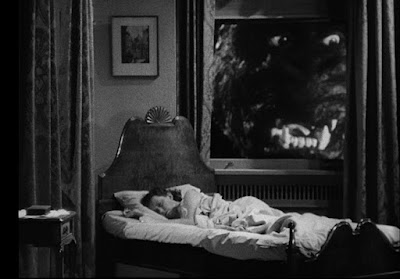

The other standout is Fay Wray. She’s mesmerising and very sexy and she’s never whiny.

And, to be fair, Bruce Cabot is quite good as the handsome first mate Jack Driscoll with whom Ann falls in love.

The Warner Archive Blu-Ray offers a lovely transfer and most importantly the film is uncut. Anyone who saw King Kong on TV in the 60s, 70s or 80s was seeing a heavily cut print. The audio commentary track features Ray Harryhausen, a very appropriate choice. It also features snippets or archival interviews with original cast and crew members including Merian C. Cooper and Fay Wray.

King Kong works as well today as it did ninety years ago. A hugely entertaining visually stunning movie. Very highly recommended.

Sunday, 19 May 2024

The Witch (La strega in amore, 1966)

La strega in amore is a 1966 Italian gothic horror movie in a contemporary setting, directed by Damiano Damiani. It was released in English-language markets as The Witch, The Witch in Love and Strange Obsession.

Sergio Logan (Richard Johnson) is a writer although he appears to be more interested in women than in writing. He replies to a newspaper advertisement placed by an old lady. She is looking for a live-in librarian to organise a huge manuscript collection. Sergio is intrigued because the qualifications outlined in the advertisement could only apply to one man in the whole of Italy - himself. Why is the old lady so interested in employing him?

The old lady is Consuelo Lorente (Sarah Ferrati). Sergio considers the possibility that she is merely looking for a toy boy. But the manuscript collection exists, as does the library. Then things get a little odd, and then Sergio meets Aura (Rosanna Schiaffino), the old lady’s daughter.

He had already decided to decline the job offer but now he thinks it might involve the possibility of persuading Aura into bed, and that interests him a lot more than old manuscripts. He decides to take the job.

Sergio is a somewhat amoral character. He’s a womaniser and he’ll do whatever it takes to get a woman into bed. He isn’t bothered by the idea of lying or manipulating people. When it comes to women he’s used to calling the shots and it doesn’t occur to him that someday a woman might turn the tables on him.


He encounters Fabrizio (Gian Maria Volontè), his predecessor in the librarian job, and his predecessor in others ways that Sergio doesn’t yet fully understand. Fabrizio has apparently been given his marching orders but he’s still there and seems to intend to stay. Sergio’s mistake is to make certain very obvious assumptions about the setup. He assumes that Consuelo is a middle-aged woman terrified of getting old and looking for young male bed partners. That’s not what is going on, and Sergio will come to regret making such blithe assumptions.

It’s obvious to Sergio that Fabrizio has been sharing Aura’s bed. It looks like a classic romanic triangle, with Sergio as Aura’s new lover and Fabrizio as the displaced lover. There’s plenty of tension between the two men.


The audience will immediately recognise that there’s something wrong about this strange household. Consuelo lives in what is virtually a palace, hidden away in the middle of an ordinary street in Rome. There’s an atmosphere of decay and decadence, we suspect there are some dark secrets concealed here, the stories Consuelo tells of her marriage to her late husband should ring alarm bells for Sergio but they don’t. There’s an unhealthy overheated excessively enclosed atmosphere.

Sergio of course doesn’t know that he’s a character in a horror movie so he assumes Consuelo is just a rich crazy old eccentric trying to convince herself that she’s still the sex kitten she once was. A viewer who didn’t know that this was a gothic horror movie might well make the same assumptions. Until very late in the movie there are no overt signs of anything supernatural. The movie seems to be a psychological or perhaps an erotic thriller, with a film noir tinge (enhanced by some quite noirish black-and-white cinematography). It might even be a twisted melodrama.


The viewer will however start to suspect what’s going on long before Sergio does. There are subtle clues, and things that don’t quite add up. We start to think that Sergio has involved himself in something very strange and very perverse and most viewers will doubtless figure out the secret long before the final reveal.

Richard Johnson was inspired casting. He’s so over-confident and arrogant that he misses all the red flags. At the same time Sergio is not actually evil and Johnson makes him just sufficiently sympathetic that we don’t want anything too terrible to happen to him. Rosanna Schiaffino is excellent. She makes Aura seem slightly mysterious without overdoing it. Sarah Ferrati is wonderfully disturbing as Consuelo. Gian Maria Volontè gives a strange unsettling highly strung performance as Fabrizio, who could just as easily be a villain or a victim.

When things get really weird and the gothic horror elements kick in they’re done quite subtly. The horror is all the more effective for being low-key. This is not grand guignol stuff.


If you’re expecting conventional gothic horror you might be disappointed. Until very late in the movie it has the feel and tone of a noirish psychosexual melodrama. It never does become a conventional gothic horror movie. It does however have a protagonist put into a situation which threatens psychological and emotional destruction. The threat is to the psyche, and maybe the soul, rather than the body. As to whether there’s a threat to his physical existence as well, you’ll have to watch the movie to find out.

This is a movie that includes some classic gothic tropes but it goes out of its way to avoid dealing with them in a routine horror film fashion. It’s creepy and disturbing rather than scary. If you can accept those things then it’s highly recommended.

This film is part of Arrow’s Gothic Fantastico Blu-Ray boxed set. La strega in amore gets a lovely transfer. Kat Ellinger’s audio commentary is as fascinating as the movie. I liked her unexpected comparison of this movie with both Sunset Boulevard and Double Indemnity and her placing of the movie within the context of decadent literature.

Friday, 17 May 2024

Excalibur (1981)

John Boorman’s Excalibur is a very ambitious retelling of the legend of King Arthur. Despite its ambitions it was apparently a rather modestly budgeted movie. Boorman claims to have inadvertently kicked off the sword-and-sorcery boom of the 80s. Given that Conan the Barbarian came out in 1982, a year after Excalibur, he may have a point.

Excalibur aims to retell the entire Arthurian legend, starting before the birth of Arthur.

Boorman’s idea was to show the three stages in the history of the land, coinciding with the three stages of Arthur’s life. The idea that the king and the land are one is central to the myth. If the king thrives, if he is strong and just, then the land thrives. If the king loses his way then the land suffers.

The first third of the movie is the first stage, an age of barbarism and chaos. It is Arthur’s destiny to unite and civilise the land. Boorman saw the story as also being a metaphor for the rise of Christianity and a more rational individualistic outlook displacing the older nature-centred concept of the land, the king and the people being mystically and magically linked. Which in some ways means that civilisation contains within itself the seeds of its own destruction, since an individualistic rational conception of life is incompatible with the older truth that the king and the land are one. Boorman doesn’t try to tell us which of those outlooks we should prefer. We have to make up our own minds. This is a movie for grown-ups.

Britain is a chaotic divided land. The sorcerer Merlin (Nicol Williamson) aims to unite the land under Uther Pendragon (Gabriel Byrne). He hopes that Uther will be the man capable of doing so, but Merlin has his doubts when Uther becomes obsessed with Igrayne (played by Boorman’s daughter Katrine Boorman), the beautiful young wife of the duke of Cornwall (Corin Redgrave). Uther persuades Merlin to use his magic to allow him to spend the night with Igrayne, with Igrayne thinking she is making love with her husband. This night of lust will have immense consequences. The child that results is Arthur, and the deal was that the child would be Merlin’s to raise as he sees fit. The other consequence is that Igrayne’s young daughter Morgana (Arthur’s half-sister) will have a life-long grudge against both Merlin and Arthur.


Merlin sees the boy Arthur as the man destined to bring a new world into being. Merlin however knows that there will be no place for him in this new world. He is in effect putting in train events that will destroy the world of magic and of the old gods, the world to which he belongs. Merlin accepts this as inevitable. Morgana will also come to realise that there is no place for her in this new world. She belongs to the world of the old gods, the world of mysticism and magic.

This first stage of the movie has a dark grungy look. This was not quite the first epic to go for this look. The excellent The War Lord, made back in 1965, had pioneered the gritty realistic approach to the epic but Excalibur puts this approach to a very different use.

The second stage begins when Arthur becomes king, ushering in an age of prosperity, peace and stability. The whole look and tone of the movie changes. Everything is bright and airy. Camelot is not quite a fairy tale world, but it is a world of light and of order.


This can however only continue as long as the king is strong and just. The problem is that Arthur is betrayed by his queen Guenevere (Cherie Lunghi) and his best friend and most trusted knight, Lancelot (Nicholas Clay).

The king has lost his faith in himself and in his destiny and he has lost his sense of his own destiny. The king sickens physically, morally and spiritually and the land sickens. There is famine and plague, and misery. Again the tone and look of the movie changes. We’re now in a dark and gloomy world.

Morgana has played a sinister role in promoting discord between the king and queen, but it is the betrayal by Guenevere and Lancelot that does the real damage.

Once again magic has been used to bring about a fateful sexual union, and the birth of a child which will have consequences. The child is Mordred, the son of Arthur and Morgana.


Merlin is determined to prevent the fatal consequences which will follow, and a battle of magic between Merlin and Morgana ensues.

The Arthurian legend is no cheerful fairy tale. It is a tragedy. The triumph of good over evil cannot be assumed. The triumph of the new world over the old cannot be assumed. In this third stage of the movie there is hope, perhaps the Quest for the Grail can restore both the king and the land, but it’s a precarious and desperate hope.

Merlin and Morgana are by far the most interesting characters. They are outsiders. They belong to a different world. A pre-rational world of pagan gods, nature mysticism and magic. Arthur is ushering in a new world, a world in which there will be no place for Merlin and Morgana. While Morgana has other more personal reasons for opposing Arthur she would have to oppose him anyway because he represents this new world.

Merlin is aware that there will be no place for him in this new world. He believes it is destined to come anyway, and that he is destined to play a major part in bringing this about.


Perhaps Merlin knows that Arthur’s world will not last, and will end in a reversion to chaos and barbarism. Perhaps he sees human history as a cyclical thing, as in Norse mythology where the world will inevitably be destroyed, and then reborn. The idea of an eventual rebirth is certainly implicit in the Arthurian legend - one day a king will once again appear and will once again claim Excalibur from the lady in the lake.

This movie probably has more resonance today than it had in 1981, given that we now live in an age of gloom and pessimism.

There are some great action scenes and the movie can certainly can be enjoyed as a fantasy action movie, or even indeed as a sword-and-sorcery movie. There is however also plenty of thematic and emotional complexity.

Boorman relies mostly on fairly simple special effects. It’s another demonstration that talent and imagination (and intelligence) matter more than money and gee-whizz digital effects.

Excalibur looks superb on Blu-Ray and John Boorman’s audio commentary is what an audio commentary should be. He doesn’t tell us things that we can perfectly well see for ourselves. Instead he tells us how and why he made the movie and what he was trying to achieve.

Excalibur is very highly recommended.

Wednesday, 15 May 2024

The Fifth Floor (1978)

The Fifth Floor is a 1978 thriller that is basically a One Flew Over the Cuckoo’s Nest rip-off.

Producer/director/co-writer Howard Avedis had made some interesting exploitation drive-in movies in the early 70s.

The Fifth Floor begins with Kelly McIntyre (Dianne Hull) working in a disco to pay her way through college. She’s just had a fight with her boyfriend Ronnie Denton (John David Carson).

Kelly has a drink to cheer herself up and ends up on the dance floor having convulsions. She is rushed to hospital. The diagnosis is strychnine poisoning. Kelly is convinced that someone has tried to kill her. The doctors are convinced she tried to commit suicide, so she’s locked up in the psycho ward on the fifth floor.

When she tries to explain that she isn’t crazy and that someone really tried to kill her. The psychiatrist Dr Coleman (Mel Ferrer) decides she must be deluded and paranoid. He’s going to keep her in the psycho ward.

The psycho ward is as nightmarish as you’d expect but the biggest problem is male psychiatric nurse Carl (Bo Hopkins). He’s obviously a sadist and a sleazeball but no-one on the staff has noticed because let’s face it, this is a psychiatric hospital and the staff (including the women) are all sleazebags and bullies.


Carl tries to rape Kelly. When Kelly complains it is seen as proof that she’s paranoid.

Kelly is starting to find out how psychiatric hospitals work. It doesn’t matter if you’re crazy or not. What matters is whether or not you have power. The staff have power. The patients have no power, and no rights. They are also not allowed any self-respect. The female patients have to shower while being watched by male nurses.

And Carl is not going to give up on Kelly.

Kelly isn’t the only patient being brutalised. They’re all being brutalised. And she isn’t the first female patient to have attracted Carl’s attention. She’s befriended a woman named Melanie (Sharon Farrell) who has had the same experience.


Melanie wasn’t crazy either, but she is now.

Kelly has no contact with the outside word. Patients are not allowed to make telephone calls.

She knows she isn’t crazy but she knows her sanity can only hold up for so long. She is determined not to break, but everybody breaks eventually. She contemplates escape. But what happens if she escapes? Nobody will believe that an escaped mental patient might be sane.

The acting is mostly what you expect in an exploitation movie, because this essentially is an exploitation movie. But that’s the kind of acting you need in a movie like this. You don’t want subtlety, you want scenery-chewing. And there are some fine scenery-chewers in this film.


Bo Hopkins as Carl is a study in sadistic malevolence. Anthony James and Robert Englund contribute delightfully excessive performances as patients. Julie Adams as the senior nurse is a nasty piece of work, a woman who never doubts that she is right and the patients are wrong. John David Carson is nicely ambiguous as Kelly’s boyfriend. Is he on her side or not?

Dianne Hull as Kelly is the exception. She does give a subtle performance and it works. She’s the sane centre around which all the craziness revolves.

There’s only a small amount of actual violence but this movies manages to be pretty harrowing. There’s not much nudity but there’s definitely a sleazy vibe to it.


The Fifth Floor
was obviously a low-budget effort and it’s rough around the edges but it’s effective and it gets its point across. It’s a reasonably good entry in the fascinating psychiatric terror sub-genre. Highly recommended.

The Code Red DVD offers an acceptable if hardly dazzling transfer with very little in the way of extras.

I’ve reviewed another of Howard Avedis’s movies, The Teacher (1974), which is flawed but interesting.

Sunday, 12 May 2024

Syndicate Sadists (1975)

Syndicate Sadists (Il giustiziere sfida la città) is a 1975 movie directed by Umberto Lenzi that falls within the poliziotteschi genre.

This is not a cop movie. The police play no part whatsoever in the story. This is more of a lone wolf hero vigilante movie.

It begins with a mysterious stranger riding into town. He rides a motorcycle rather than a horse but this movie does have major western elements.

The stranger is Rambo (Tomas Milian) and yes the name was taken from the books on which the Sylvester Stallone movies were based. Rambo is a loner. He doesn’t like authority. His buddy Scalia (Mario Piave) works for a private police force. This was the period of Italian history known as the Years of Lead, with violent crime getting out of control and regular terrorist outrages. The idea of rich people turning to private cops rather than the official police has plenty of plausibility. Scalia wants Rambo to join up but Rambo isn’t a team player. This is the equivalent of the scene in dozens of westerns in which the hero is offered a sheriff’s badge or a deputy’s badge but turns it down.

Scalia is trying to solve a kidnapping on his own, to further his career. Milan is run by two criminal organisations, the equivalent of rival outlaw gangs in a western. There’s the Conti gang, run by a hoodlum named Conti (Luciano Catenacci), and the Paternò gang, run by old man Paternò (Joseph Cotten). Paternò is old and blind and his hot-headed son has ambitions to take over.


Rambo has no interest in the case, until something happens that gives him a personal score to settle. Now he intends to wage a one-man war against both gangs.

Vincenzo Mannino’s script is basically a grab-bag of clichés. Lenzi wasn’t enthusiastic about doing this movie and wasn’t happy with it. It’s easy to see why but Tomas Milian’s charismatic performance and the excellent action scenes more than compensate for the deficiencies of the screenplay. There are as many car and motorcycle chases as any reasonable person could wish for.

While the plot might be lacking in originality it holds together very satisfactorily and it provides the necessary excuses for the action scenes.


There’s also plenty of violence but it’s not especially graphic. Lenzi is more interested in giving the viewer an adrenalin rush than in relying on gore.

There is however a copious expenditure of small arms ammunition.

The final showdown is superbly executed and very tense and exciting.

Lenzi paces the film extremely well.

There’s no sex and no nudity. The emphasis is entirely on action and Lenzi is not going to distract us from that for a moment.


There’s no complexity to any of the characters. Rambo is just another mysterious gunslinger of the kind so familiar in westerns.

The one possible exception is old man Paternò, who has a strange and interesting attitude towards Rambo. It’s possible that Rambo is the son he’d have liked to have had, instead of the idiot son he actually has. This relationship could perhaps have been developed a bit more. Joseph Cotten has his moments in this film but he looks very old and frail. Of course that’s the point of the character, that he’s an old man losing his grip on his organisation so Cotten’s performance does actually work quite well.


Don’t expect anything profound or ground-breaking from this movie. Just sit back and enjoy the roller-coaster ride and the mayhem, and enjoy watching Tomas Milian giving a master-class in charisma.

My liking for Umberto Lenzi grows with each Lenzi film I see. Syndicate Sadists is top-notch entertainment, highly recommended.

This is one of five films in Severin’s Violent Streets Umberto Lenzi/Tomas Milian poliziotteschi Blu-Ray boxed set. Extras include interviews with various people involved in the film, the most interesting being the Lenzi interview. The transfer is superb. English and Italian language options are provided.

Thursday, 9 May 2024

The X from Outer Space (1967)

Criterion’s Eclipse Series 37 DVD boxed set When Horror Came to Shochiku includes four movies made by Shochiku studio in 1967-68 as part of the studio’s short-lived attempt to jump on the science fiction/horror/monster movie bandwagon. The X from Outer Space (1967), directed by Kazui Nihonmatsu, is very definitely a science fiction monster movie.

It begins with plans to send a nuclear-powered manned spacecraft (nicknamed the Astro-Boat) to Mars. Previous missions have ended in disaster. The crew of four naturally includes a beautiful blonde girl scientist, Lisa.

The voyage runs into the usual hazards, such as meteor storms. They make a stopover on the Moon, which leads to romantic complications. Lisa is in love with the spaceship’s commander, Captain Sano, but she has a rival on the Moon. A cute astronaut girl named Michiko.

After leaving the Moon the spaceship runs into real trouble - a UFO. The astronauts find weird stuff on the exterior of their ship. They bring the stuff inside and discover a kind of egg-shaped object. They decide to bring it back to Earth. 

You won't be surprised to learn that this turns out to be a really bad move on their part.


The egg contains a monster and pretty soon he’s a really big monster. He’s 200 feet tall. He’s not very friendly. He wants to stomp things. He wants to stomp cities. Being a monster he has his heart set on stomping Tokyo. After that he’ll see what else there is in Japan to stomp. The monster is given the name Guilali.

He is of course unstoppable. And of course he feeds on nuclear energy.

Tanks and fighter jets don’t bother him in the least.

The only hope is to come up with a scientific answer. Lisa may have the solution - a hitherto undiscovered substance which may destroy Guilali’s power. But it will have to be brought back from the Moon.


It’s now a race against time. Can the astronauts bring the anti-Guilali substance back to Earth before Tokyo gets stomped?

There’s nothing very original here. It’s your basic Japanese monster movie. The studio was clearly aiming at a young audience and the movie contains just about everything that kids were going to love.

The special effects and the miniatures work might be cheap and cheesy but they’re fun and cool. The monster is goofy but he’s fun and cool as well. OK, he does look a bit like a dinosaur with a chicken’s head but he does look like a monster. Disappointingly he doesn’t breathe fire but you can’t have everything.


The best thing about this movie is that there’s no message. The monster isn’t anyone’s fault. This is just a lighthearted monster movie romp.

Once the monster begins his rampage the movie’s pacing accelerates. Which is a good thing. We’re not given time to notice any technical flaws or to notice the cheapness of the effects. It’s just action scene after action scene.

The acting is fine by monster movie standards. There are likeable heroes. Lisa and Michiko are smart, brave and adorable. The elderly generals and politicians are suitably grave and portentous.


There is the romantic sub-plot alluded to earlier and and given that this is really a kids’ movie it’s kept at an innocent and rather sweet level.

As since it is obviously aimed at kids there’s no point in being hyper-critical about plot holes or any failures in logic, or any lack of scientific plausibility.

The X from Outer Space is silly and goofy but I think it’s fair to say that it was intended to be nothing more than lighthearted fun, and I think it succeeds on the intended level.

The transfer is lovely. Both the Japanese (with English subtitles) and English-dubbed audio options are provided. The only extra is brief liner notes (which take the movie much too seriously).

Tuesday, 7 May 2024

Devil’s Possessed (1974)

Devil’s Possessed (El mariscal del infierno) was written by Paul Naschy (who also starred) and directed by León Klimovsky. It’s a story of horrific crimes committed in 15th century France by the king’s marshal Barón Gilles de Lancré (Naschy). It was released in 1974.

This movie is either a swashbuckling adventure with quite a few horror elements or a horror film with quite a few swashbuckling adventure elements.

It’s based very loosely on the real-life case of Gilles de Rais (1405-1440), notorious as one of the most prolific mass murderers in history although at various times since then doubts have been raised about his guilt.

In the movie Gilles de Lancré is disillusioned by what he perceives as the king’s lack of gratitude for his political and military services. Gilles withdraws from public life and becomes increasingly obsessed by alchemy and occult practices. He employs the services of renowned alchemist Simon de Braqueville (Eduardo Calvo) who assures Gilles that he will have access to power and unlimited riches. But a price will have to be paid. The magical operations will require the sacrifice of virgins.

Gilles is horrified but his ambitions overwhelm his horrors. He is aiming at nothing less than the throne of France. His ambitions are encouraged by the beautiful but scheming Georgelle (Norma Sebre).


Gilles finds himself with two problems. Firstly the powers and riches promised by de Braqueville have not materialised. Gilles is told that more virgins will have to be sacrificed. Gilles remains confident but he grows impatient, and he has spent most of his fortune financing de Braqueville’s experiments.

Secondly, it turns out that he is not really cut out for a career of evil. He is troubled by nightmares.

Gilles, despite his achievements as a soldier, is in some ways a weak and foolish man. He is easily led. And he is very easily manipulated by a ruthless woman like Georgelle.

Soon he has a third problem, the arrival of his old comrade-in-arms Gaston de Malebranche (Guillermo Bredeston).


Gilles hopes that de Malebranche will take service with him and become his right-hand man. Gaston however is disturbed by what he has seen in de Lancré’s castle and what he has seen in the countryside. The peasants are being crippled by taxation and there is much evidence of the brutality of de Lancré’s men. Gaston is a straight arrow. His instinct is to oppose tyrants and if his old friend Gilles has become a tyrant he will certainly oppose him.

Gaston joins a band of rebels living in the forest. At this point the movie starts to borrow heavily from the Robin Hood legend, with Gaston leading an outlaw band against a wicked tyrant. Gaston disguises himself in order to participate in a joust organised by Gilles in a scene that is very reminiscent of Robin Hood entering the archery contest organised by the Sheriff of Nottingham.

The noble and lovely Graciela (Graciela Nilson) plays a role that brings Maid Marian to mind.


Of course the evil in the Robin Hood legend is also driven by ambition - Prince John’s determination to seize power. Devil’s Possessed is like Robin Hood with 1970s gore and graphic brutality.

Gilles de Lancré is not exactly a tragic figure. He has freely chosen evil and he displays horrific cruelty. We don’t feel inclined to be too sympathetic towards him. At the same time we do get a sense that perhaps he was at one time a good man. Naschy manages to make him look like a man haunted by his own evil. He also has no trouble convincing us that Gilles is man whose hold on sanity is becoming ever more tenuous. There are perhaps a few echoes of Macbeth in Gilles de Lancré.

Georgelle isn’t the least bit haunted by her evilness. She relishes it. Norma Sebre does a great job here.

Guillermo Bredeston as Gaston de Malebranche does the noble swashbuckling hero thing adequately enough.


Devil’s Possessed
has effectively horrifying moments, it has a real atmosphere of evil, it’s fast-moving and it’s action-packed. It has fine performances and it has Naschy in top form. There’s also a rather nice touch at the end. Highly recommended.

This film is included in Shout! Factory’s Paul Naschy Collection II Blu-Ray boxed set. The transfer is very good.

I consider León Klimovsky to be a rather underrated director. I’ve reviewed a number of his movies - Vengeance of the Zombies (1973, with Naschy) is very good and I enjoyed The Vampires’ Night Orgy (1973) and Werewolf vs Vampire Woman (1971)

I’ve reviewed quite a few Paul Naschy movies, including the intriguing gothic horror/giallo hybrid Panic Beats (1983) and the terrific werewolf-in-Japan flick The Beast and the Magic Sword (1983).