Saturday, 10 February 2024

Prey (1977)

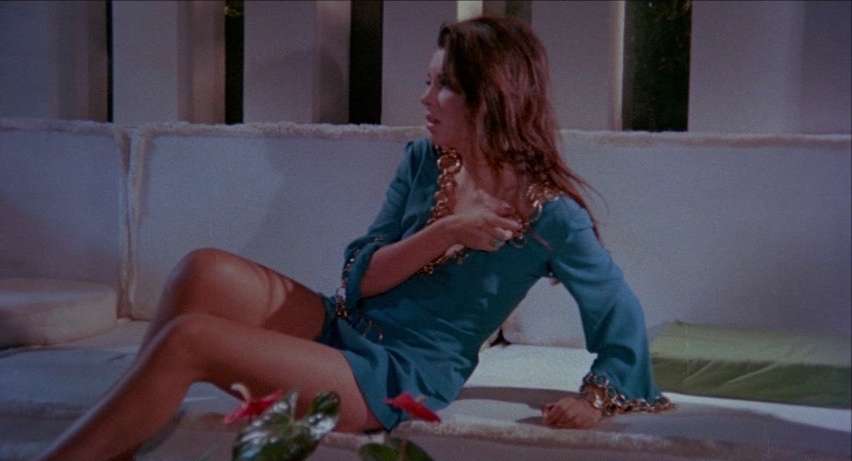
Prey is a 1977 British science fiction-horror movie directed by Norman J. Warren and it doesn’t quite conform to conventional genre expectations.

An alien spacecraft with a single crew member lands somewhere in the English countryside. The alien is confused and disoriented and lashes out violently when he feels himself threatened. As a result of his misinterpretations of human behaviour he kills two people.

He finds refuge in an isolated farmhouse. Jo (Sally Faulkner) and Jessica (Glory Annen) are the only inhabitants of the farmhouse. They are lesbians. They’re not sure what to make of the alien (who calls himself Anders and is played by Barry Stokes). He looks entirely human and they have no reason to suspect that he is anything but human but his behaviour is rather odd.

The atmosphere in the farmhouse was tense even before Anders arrived. It becomes more tense. Anders has wandered into the middle of an emotional minefield.

Anders becomes the catalyst for further emotional dramas although he actually doesn’t participate. But his presence in the house is quite enough.

Anders is more the manipulated than the manipulator. Jo goes out of her way to humiliate him in order to try to make him seem ridiculous and unattractive in Jessica’s eyes.


And we’re still not entirely sure what his intentions are.

Of course the dramas will come to a head, but not quite in the way we might expect.

There are certainly science fictional and horror elements in this movie but much of the focus is on the emotional dramas at the farmhouse.

The relationship between Jo and Jessica is clearly very troubled. Before Anders’ arrival Jessica announces that she wants to leave for a while, to spend some time on her own. Jo’s reaction is extremely hostile. Jo is clearly jealous and possessive. Jo hates men. It’s obvious that she thinks that Jessica is a bit too fond of men. The two women sleep not just in separate beds but in separate bedrooms. There seems to be a lack of physical intimacy between them.


Jo seems a little unstable and definitely inclined to anger. She is clearly a time bomb ticking away, a bomb that could explode at any moment.

In a 1970s exploitation movie you expect a lesbian sex scene and you get one and it’s moderately graphic but it’s rather different from the usual run of such scenes. There’s an extreme emotional intensity. It’s as if their frantic love-making is a desperate attempt to convince themselves that their relationship is still viable. This is not just a sex scene thrown in out of commercial necessity. This is two real very troubled people having sex.

There are only two sex scenes but both are crucial and both pack a punch, in very different ways.


I think it is legitimate to wonder if this movie would have worked just as well, or possibly better, as a straightforward erotic thriller without the science fiction elements. I think it’s possible, but on the other hand the fact that Anders is an alien explains why he makes no overt sexual advances to either woman. And that works quite well. It emphasises that Jo’s jealousy is irrational. It emphasises the paranoid nature of her anxiety that Jessica will betray her sexually or leave her.

The acting is pretty good. Barry Stokes is weirdly detached, as you]d expect from an alien who understands nothing of people. Sally Faulkner is nicely intense with subtle hints of derangement that slowly become more marked. Glory Annen (in her film debut) is excellent. There are really only three characters in the movie which puts a lot of pressure on the three leads but they come through with flying colours.


This was a very low-budget movie made insanely quickly but it’s another movie that demonstrates that talent and commitment matter more than money when it comes to making movies.

Norman J. Warren did not direct very many movies. More than anything else this probably reflected the catastrophic state the British film industry was in by the mid-70s. Especially the British popular film industry. By the late 70s obtaining funding for genre movies was extremely difficult; by the mid-80s it was impossible. But he did make Satan’s Slave (1976) which is an awesome movie. And he did make the totally insane Inseminoid.

Prey is weird and disturbing but it’s a pleasingly interesting and oddball movie which is highly recommended.

The Vinegar Syndrome Blu-Ray looks fabulous and includes some worthwhile extras including an audio commentary by Norman J. Warren and Sally Faulkner.

Wednesday, 7 February 2024

A Quiet Place To Kill (1970)

A Quiet Place To Kill was the third of the four gialli directed by Umberto Lenzi and starring Carroll Baker. It should be noted that the first of these four movies, Orgasmo, was released in the U.S. as Paranoia. Confusingly the third movie was entitled Paranoia in Italy but released internationally as A Quiet Place To Kill. To keep things as clear as possible we will refer to it here as A Quiet Place To Kill (which is in any case a much better title).

This movie is what I call a Phase 1 or early period giallo. You could also refer to this period as the pre-Argento giallo period. Argento’s 1970 The Bird with the Crystal Plumage redefined the giallo. Henceforward Phase 2 or late period gialli would mostly be serial killer movies, they would invariably feature a black-gloved killer and they would be characterised by an over-the-top baroque visual style with lots of blood.

Phase 1 or early period gialli are quite different. There’s not a great deal of blood. They are usually not serial killer movies. They don’t necessarily involve black-gloved killers. They are erotic thrillers and they are just as stylish as the later gialli but in a different, more subtle way. They also usually have an atmosphere of Swinging 60s decadence. I personally enjoy these early gialli a great deal and Umberto Lenzi did them very well indeed.

These early gialli have been overshadowed by the more flamboyant and blood-drenched later gialli but I actually have a slight preference for these earlier movies. Movies like Lucio Fulci’s One on Top of the Other (AKA Perversion Story, 1969), Romolo Guerrieri’s The Sweet Body of Deborah (1968) and Lenzi’s So Sweet, So Perverse (1969).


A Quiet Place To Kill
begins with a lady racing car driver having a near-fatal racetrack smash-up. She is Helen and she is payed by Carroll Baker. She will need to take things easy for a while. She is rather surprised to receive an invitation from Maurice (Jean Sorel) to spend some time recuperating at his villa. Maurice is her ex-husband. They did not part on friendly terms.

Helen gets another surprise when she arrives at the villa. Maurice has remarried. His new wife is Constance (Anna Proclemer). Maurice usually goes for younger more glamorous women. On the other hand Constance is rich, and Maurice definitely goes for rich women.

The atmosphere is rather tense. Constance is having dramas with her daughter. She doesn’t seem to have too much confidence in Maurice’s faithfulness. And Maurice’s desire to get Helen into bed is all too obvious. Helen has reasons to hate Maurice but she still feels a powerful sexual attraction for him. Then Constance tells Helen something rather surprising.


Initially it seems like this is going to be a conventional romantic triangle leading to the consequences that one might expect. But then the plot twists start to kick in and things get rather unpredictable.

I’m not going to say any more about the plot for fear of revealing spoilers.

Jean Sorel was definitely the ideal actor for this type of movie. Maurice is charming, amusing, handsome, sexy and (as both Helen and Constance agree) remarkably good in bed. He is also cynical and totally amoral, untrustworthy, irresponsible, decadent and quite possibly dangerous. A sensible woman would have nothing to do with him, but he’s so charming and sexy that women find it difficult to be sensible about him. Jean Sorel nails the character to perfection.


Carroll Baker was close to being the perfect giallo actress - very sexy but very likeable and possibly dangerous. And a very fine and versatile (and somewhat underrated) actress.

And The Sweet Body of Deborah in 1968 had already established that Sorel and Baker had real chemistry.

Umberto Lenzi should be more admired as a director than he is, and he made some great gialli including the wildly offbeat but brilliant Spasmo (1974). His late 60s and early 70s movies in particular are deserving of more attention. His early gialli are stylish without being showy, and he certainly could capture the atmosphere of the decadent jet set.


I don’t recall any blood at all in this movie, which will certainly puzzle giallo fans. There’s some nudity, but not much. There are no actual sex scenes.

If you go into A Quiet Place To Kill expecting a conventional giallo of the type that became ubiquitous in the 70s you may be disappointed. This represents a distinctive sub-genre of the giallo and it may be counter-productive to consider these late 60s movies as gialli at all. This is an erotic thriller and there’s nothing wrong with that. It’s an interesting genre and one of which I’m very fond. The focus here is on twisted emotional and erotic relationships and the screenplay and the acting are of sufficiently high calibre to make it an intelligent provocative look at such relationships.

A Quiet Place To Kill is a brilliant little movie and it’s very highly recommended.

The Severin Blu-Ray offers a fully restored transfer which looks luscious.

Monday, 5 February 2024

The Ballad of Tam Lin (1970)

The Ballad of Tam Lin (also released as Tam Lin and as The Devil's Widow) was Roddy McDowall’s first and only film as a director. It’s a strange movie that probably never had any chance of commercial success.

It’s based on, or perhaps it would be better to say inspired by, a well-known Scottish folk tale about a love triangle involving the queen of the fairies. The approach taken by Director McDowall and screenwriter William Spier is not at all what you would expect and probably doomed the movie commercially. It is however an undeniably interesting approach.

Michaela ‘Miki’ Cazaret (Ava Gardner) is a very very rich woman who owns a very old but palatial home in Scotland. For her amusement she has collected a bunch of young hippies. We get an immediate interesting conjunction of the decadence of the very rich and the world of the counter-culture which by 1971 was arguably reaching a point of decadence of its own.

For her further amusement she collects handsome young men. Her latest toy boy is Tom Lynn (based on the Tam Lin of the folk tale and played by Ian McShane).

Things get awkward when Tom meets pretty vicar’s daughter Janet Ainsley (Stephanie Beacham) and they fall in love. As you might imagine Miki is less than delighted by this. She is however confident that she is still in full control of the situation and can persuade Tom to continue dancing to her tune.


Tom however is not prepared to give Janet up and there are further complications which draw Tom and Janet closer together. It’s obvious that sooner or later Miki will take steps to bring her toy boy back into line and to punish him. There are hints that in the past young men in Tom’s position have suffered drastic punishments.

A further complication is that one of Miki’s collection of Flower Children is angling to take Tom’s place in Miki’s affections, and her bed (and presumably angling for the rich financial rewards Miki bestows on her young men).

Towards the end the movie changes gear just a bit but the ending, like the whole movie, is riddled with ambiguities.


For the female lead what was needed was an actress in her forties who could be imperious, grand, glamorous and flamboyant and there could have been no better choice than Ava Gardner. She completely dominates the movie and her bravura performance is by far this film’s biggest asset.

Veteran British character actor Richard Wattis is unexpectedly sinister as Miki’s scheming private secretary. Stephanie Beacham is fine although like me you might find Janet a bit too sweet and innocent. That however is probably a carry-over from the folk tale. Joanna Lumley and Madeline Smith have supporting roles as members of Miki’s little circle of counter-culture types.

For me the weak link is Ian McShane. OK, he’s not playing a very admirable character but it’s difficult to feel any sympathy for him at all.


Tom and Janet are supposedly the hero and heroine and Miki is the villainess but I found Miki to be the only character I really cared about. This could be seen as unbalancing the film but on the other hand it does make it a lot more interesting. Tom is the hero but he’s not a very nice person. Miki is the villainess but she’s not a mere monster. We might not approve of her methods but we can understand her motivations and we acknowledge her emotional hurt.

I’m not sure that this movie entirely works but it’s undeniably interesting. It takes a particular approach to the material and sticks to it (I can’t say any more without revealing spoilers).


What’s really interesting is that the movie’s weaknesses (the unsympathetic hero and the surprisingly sympathetic villainess) can also be seen as strengths.

There will be a temptation to see this film as belonging to the folk horror genre that blossomed briefly in the late 60s and early 70s. It certainly has affinities with that genre although it also differs from most such movies in certain ways.

The Ballad of Tam Lin is a bit of an oddity but it’s an interesting oddity. It’s worth seeing anyway but Ava Gardner’s performance makes it a must-see. This may be her career-best performance. It is therefore highly recommended.

The imprint Blu-Ray looks great and is packed with extras.

Saturday, 3 February 2024

Terrifying Girls High School: Animal Classmates (1973)

Terrifying Girls’ High School: Animal Classmates (AKA Terrifying Girls’ High School: Animal Courage) was the fourth and last of Toei’s Terrifying Girls’ High School pinky violence films. It’s now been released, with English subtitles, on Blu-Ray.

Only two of these movies are currently available in English-friendly versions, the other being the wonderful Terrifying Girls’ High School: Lynch Law Classroom.

Animal Classmates, like Lynch Law Classroom, deals with girl juvenile delinquents in a high school setting, with the high school being the setting for all manner of criminal shenanigans. Animal Classmates also has some affinities with the curious Japanese Catholicsploitation sub-genre.

Reiko Ike (who starred in all four movies in the series) is Aki Kazahana, one of five new pupils at the very exclusive Seiwa Academy for Girls.

The school is the stage for a power struggle between two factions, the Athletic Association and the Black Rose Society. They’re both pretty ruthless. Aki, despite her reputation as a very tough cookie, is reluctant to get involved with either faction. But remaining uninvolved may not be an option.


One student from the school will be chosen, by competitive examination, to be an overseas student at the Seiwa Academy’s American sister school, Saint Gregory’s College.

The power struggle between the factions heats up. The Black Rose Society is quite wealthy - they run their own prostitution racket and various other criminal enterprises.

The male teachers seem to enjoy watching the girls in the showers. Like most pinky violence movies this one has a very strong anti-establishment anti-authoritarian stance. The establishment is greedy ruthless sleazy men with no honour. The girl juvenile delinquents at least have some vague code of honour.


This movie, like Lynch Law Classroom, shows definite samurai movie influences with rival girl leaders challenging each other to formal duels.

There’s something very sinister going on at this school. It does seem a bit odd when one of the girls competing for the overseas student scholarship is told that if she wants to be in the running she’ll have to consent to being photographed nude. She is told that no Catholic school would consider a girl as a student without first seeing nude photographs of her! This is the kind of WTF moment that makes Japanese exploitation movies so endearing.

The Athletic Association seems to be mostly interested in fencing and archery. Which means that this is a girl juvenile delinquent movie that is going to feature some swordplay.


There’s no shortage of violence. If you enjoy seeing pretty girls in sailor suits beating the daylights out of each other you’ll love this movie. And if you enjoy seeing pretty girls in sailor suits trying to kill each other with swords you’ll love it even more. The climactic swordfight is pretty good. You also get a full-scale battle scene (and I do mean full-scale) between the girls of the rival factions.

There’s a fair amount of nudity (although being a 70s Japanese movie there’s no frontal nudity) and a fair amount of sleazy sex.

One of the things that differentiates Japanese exploitation movies of the 70s (such as the pinky violence films) from similar movies from other countries is that these Japanese movies were major-studio productions. They were made by people who were seasoned professionals. They tend to be technically flawless. They also feature acting of a generally fairly high standard.


While I still consider Miki Sugimoto and Meiko Kaji to be the queens of pinky violence I must admit that Reiko Ike does a very fine job here.

This is a movie that ticks most of the pinky violence boxes and it’s great sleazy entertainment. A must-have for pinky violence aficionados. If you’re new to the world of pinky violence this film is not a bad starting place. It’s a typical representative of the genre. Highly recommended.

The Discotek Media Blu-Ray has no extras but offers a very nice transfer.

I’ve also reviewed Terrifying Girls' High School: Lynch Law Classroom (1973) which is absolutely essential viewing.

Wednesday, 31 January 2024

Cinderella (AKA The Other Cinderella, 1977)

Cinderella (released in 1977 and later retitled The Other Cinderella) is a Charles Band-produced erotic retelling of Cinderella. It’s Cinderella as a sex comedy. But it’s more than that. It’s an erotic musical comedy retelling of Cinderella. Which is just such a fabulously 1970s concept.

It stays relatively close to the familiar fairy tale. At this point one should perhaps point out that the much-loved 1697 Charles Perrault fairy tale is just one of countless versions of a folk tale that originated around 2,000 years ago. So making a few changes to the story isn’t really particularly outrageous. It’s a story that has already been tampered with many many times.

Cinderella (Cheryl ‘Rainbeaux’ Smith) lives with her stepmother and her two stepsisters and the stepsisters make her life a misery. This will come to a head with the royal ball.

The king has arranged the ball in order to find a bride for his son. The king and queen are concerned that the young man, now twenty-one, is an innocent virgin who knows nothing about sex. In fact the prince already has an immense amount of sexual experience. He may look like an innocent young man but he is fact a debauched and jaded libertine.

Every maiden in the kingdom is to be invited to the ball.


Any feature film adaptation of the story will have to add a few subplots to pad out the running time. In this case we get the various sexual adventures of the Lord Chamberlain (Kirk Scott) as he travels the realm delivering the invitations.

Naturally Cinderella’s stepsisters try to prevent Cinderella from attending. Luckily Cinderella’s fairy godmother shows up just in time.

The fairy godmother isn’t really a fairy godmother. He’s a thief. He’s also black and gay. He’s entered Cinderella’s house with burglary in mind. He feels really sorry for the poor girl. He’d love to help her but he has no means to do so. Cinderella suggests that he needs a magic wand. He doesn’t think he possesses such a thing but he looks through his bag of stolen goods and finds a very weird contraption. Cinderella is sure it must be a magic wand. It turns out that it really is a magic wand. Cinderella will go to the ball after all.


Then comes one of the movie’s many “I can’t believe they did that” moments. The fairy godmother is confident that Cinderella will wow the prince. She has a gorgeous ball gown and a glamorous hairstyle. He’s seen her in the bath and in his view she is very well equipped in the T&A department. Just one final touch is needed. With the magic wand he makes a small adjustment to a certain intimate portion of her anatomy, which will have the effect of giving said portion of her anatomy the ability to provide the most extreme pleasure. Now she really will be irresistible to the prince.

The ball is more an orgy than a ball. The prince is blindfolded while the various maidens pleasure him. Mostly he’s disappointed. He’s had so many women that he finds it difficult to get really excited any more. Until he samples Cinderella’s charms. She offers him pleasures he’d never thought possible. That’s because of that tiny adjustment the fairy godmother made to that vital part of her anatomy.


Of course Cinderella is whisked away at midnight. The prince has no idea of the identity of that special girl but he is determined to find her. He travels the length and breadth of the kingdom, testing out every maiden to find the one with the super-special lady parts.

The first thing to say about this movie is that it’s bonkers. The second thing to say is that it’s actually beyond bonkers. It takes the concept of bonkers to whole new levels.

Visually it’s bizarre and over-the-top. Some of the girls at the ball are wearing the sorts of ball gowns you expect in a fairy tale. Some look like patrons at a 1970s disco. Some would look more at home in a movie about the decadence of the Roman Empire. Some look like refugees from a fetish video. That’s typical of the movie’s crazy visual style. The odd thing is that somehow all this visual coherence does manage to cohere into a strange but fascinating and unique visual style.

This film is packed to the brim with things that some modern viewers will find dated and problematic. That’s its charm. If you’ve always wanted a Cinderella movie that includes a song about Cinderella’s vagina this is the movie for you.


It’s a sex comedy so is it funny? I think it is. It may not have you rolling in the aisles but it’s consistently amusing.

Everything about this movie is crazed. But the craziness works. It all works because it’s so goodnatured. This is just a fun sexy movie. The amount of nudity is positively staggering and it’s fairly explicit. The sex scene (there are lots of them) are reasonably graphic but it always remains softcore.

Cheryl Smith makes a fine Cinderella. She’s sweet and charming and funny, she’s sexy and she’s naked a lot.

At the end we’re told to look forward to the sequel, Cinderella 2. In fact there was a follow-up, called Fairy Tales (1978), also an erotic musical comedy fairy tale movie.

This is a delightfully weird movie that is completely nuts and for that reason it’s highly recommended.

Full Moon’s Blu-Ray release is barebones but the transfer is lovely.

Monday, 29 January 2024

Tarzan Goes to India (1962)

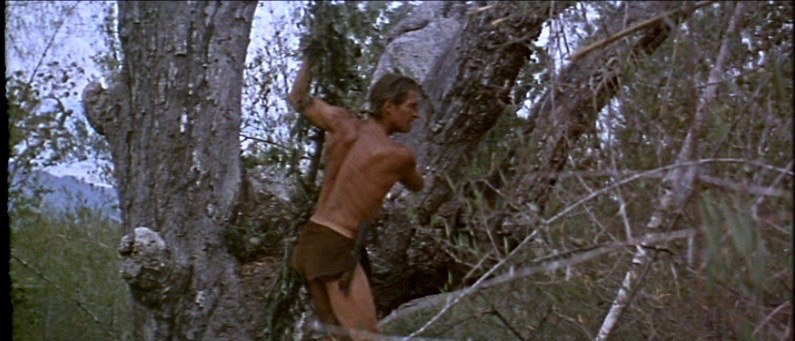
Tarzan Goes to India is a 1962 Tarzan movie produced by Sy Weintraub and starring Jock Mahoney.

Weintraub had taken over the Tarzan franchise in 1958 and realised that a fresh approach was going to be needed. The old approach was well and truly played out. He dropped the idea of Tarzan speaking halting English. He wanted a Tarzan closer to Edgar Rice Burroughs’ original conception. Tarzan would be an educated man, equally at home in the jungle or the civilised world. 

Jane was also dropped. Tarzan would now be more of a globetrotting adventurer, a man without ties. Weintraub also wanted to move away from African settings and put Tarzan into other exotic settings.

Most of all Weintraub wanted to avoid a B-movie look. These would be Tarzan movies made in colour and Cinemascope, shot on location with high production values. They would look like expensive A-pictures.

The first fruit of Weintraub’s approach was Tarzan's Greatest Adventure in 1959 and it’s a terrific Tarzan movie.

Tarzan Goes to India was shot entirely on location in India.


An elderly Indian maharajah asks for Tarzan’s help. A new dam is going to flood a valley and a herd of 300 wild elephants lives in that valley. Tarzan’s task is to persuade the elephants to leave the valley before the flood waters arrive. The difficulty is that the herd is led by a bad-tempered mean rogue bull elephant and he’s not likely to be cooperative.

And Tarzan has only a few days in which to accomplish his task.

Tarzan has a couple of allies. There’s the maharajah’s beautiful daughter. There’s also a boy named Jai who has also refused to leave the valley. Jai and his elephant Gavendra will prove occasionally exasperating but also very useful.


There are of course villains. The head engineer manager at the dam construction site, Bryce (Leo Gordon) is a nasty piece of work and he and Tarzan already have reason to hate each other. The man in overall charge of the dam project, O’Hara (Mark Dana), turns out to be equally villainous.

Tarzan doesn’t want to stop progress. He doesn’t want to stop the dam. He just wants to see progress done with humanity, with some concern being shown for the people and the animals who are likely to be affected. The people behind the dam project want progress no matter what the price. Fortunately the movie doesn’t get into heavy-handed messaging.


Naturally Tarzan encounters plenty of dangers, having to deal with attacks by cobras and leopards as well as that mean rogue bull elephant.

Jock Mahoney makes an interesting Tarzan. He was in his early forties at the time but he gets away with it. This is a Tarzan who doesn’t rely purely on speed and brute strength. He has acquired a certain amount of wisdom, and cool judgment. He’s an older wiser Tarzan.

The location shooting is excellent. The movie looks exotic without looking too much like a travelogue.

Director John Guillerman (who also helmed Tarzan’s Greatest Adventure) handles the action scenes more than competently.


Tarzan Goes to India
is fine well-crafted entertainment. Highly recommended.

The Warner Archive DVD release looks very nice indeed.

I’ve reviewed several of the other Sy Weintraub Tarzan movies - Tarzan’s Greatest Adventure (1959), Tarzan's Three Challenges (1963) and Tarzan and the Valley of Gold (1966) which is Tarzan with a Bond movie flavour. I would highly recommend all of these titles.

I’ve also reviewed a couple of the very early MGM Tarzan movies, Tarzan the Ape Man (1932) and Tarzan and His Mate (1934), which make a fascinating contrast with the Sy Weintraub Tarzan pictures. And if you’re a hardcore Tarzan fan I’ve reviewed the original 1914 Edgar Rice Burroughs novel Tarzan of the Apes.

Friday, 26 January 2024

Mario Bava's Four Times That Night (1971)

Four Times That Night is a Mario Bava sex comedy. And yes, that does make it an oddity in his filmography.

This is Rashomon done as a sex comedy. A man named Gianni encounters a young woman named Tina. She is walking her dog in the park. He asks her out. By the end of the evening he has scratches on his face and her dress is all torn. But what really happened?

We get four different accounts, and they are wildly in conflict.

According to Tina’s account Gianni tried to force himself on her and she faced a wild struggle to preserve her virtue.

According to Gianni’s account Tina seduced him and was so insatiable that he was left a physical wreck.

According to the doorman (a part-time Peeping Tom) the evening was an orgy of sexual deviance with a whole cast of participants.

The psychiatrist’s account is different again.

Not one of these accounts is convincing. Which is as it should be. It is possible, indeed likely, that we are dealing with multiple unreliable narrators all of whom have good reason to be dishonest in their recounting of the events. Which means that the whole movie has a slightly off-kilter feel, which is certainly deliberate. The viewer is supposed to remain always aware that these accounts are not documentary proof but merely stories told by various people. I think it gives the movie an interesting feel.


It is of course a movie about story-telling. There are some things we know because we were active participants or eyewitnesses but in most cases we have to rely on stories that we are told. That’s true of life. It’s also true of documentary accounts (and documentary films) which purport to be objective and impartial. It’s true of the TV news and it’s true of the evidence presented in courts of law.

And in none of these cases can we be sure that we know the actual facts. This movie explores these ideas reasonably well. The trick of course is how to wrap up a story like this. It’s a puzzle, but once you have the answer to the puzzle it’s no longer interesting. Four Times That Night manages fairly to resolve that problem fairly well.

Given Bava’s obsession with visuals it’s tempting to assume that this movie is about the unreliability of what we see, or what we think we see. Some critics have been tempted to interpret the movie this way.


I think that’s a total misunderstanding of this movie. The four narrators are not misinterpreting what they see. They are deliberately lying to us, or rather they are starting with a core of truth and then surrounding it with a tissue of lies to serve their own ends. This is not a movie about the unreliability of visual evidence. This is a movie about the unreliability and deceptiveness of narratives. We cannot trust what people tell us. The movie it most reminds me of is Edgar G. Ulmer’s Detour.

Mario Bava was incapable of making a dull-looking movie and Four Times That Night generally looks very stylish with some nice visual set-pieces. There’s also a very cool Swinging 60s vibe, and a fair helping of late 60s decadence among the rich and fashionable.

This is a sex comedy so the obvious first question is - it it funny? The answer is yes. It’s amusing and witty and the humour has a slightly oddball flavour to it. This is sophisticated European comedy so don’t expect slapstick (although there is some visual humour).


The obvious second question is - is it sexy? I think it is, but in a low-key fairly tame sort of way. There’s not much nudity, just a few topless scenes. Not being able to rely on nudity Bava concentrates on sexy shots of girls in very short dresses. I must confess that I find this quite appealing. It’s old-fashioned sexiness which relies on teasing rather than revealing.

This movie doesn’t have a high reputation even among Bava fans. That’s a bit unfair. It encountered some unfortunate production and distribution problems. It’s biggest problem was timing. It was made in 1968. In 1968 it would have been fairly hot stuff and fairly daring and might well have done extremely well. Sadly it was not released until late 1971. Things were moving quickly at that time. Movies were becoming more sexually daring almost by the month. By 1971 Four Times That Night seemed a bit too tame.


The visuals are pure Bava and they’re stunning. Bava captures the late 60s feel exceptionally well. This is thematically a fairly ambitious movie and I think it succeeds to a much greater degree than its reputation would suggest. This is Bava attempting a genre he’d never attempted before but Bava wasn’t afraid to do that. I think it’s a worthy entry in Bava’s filmography and I’m going to highly recommend it.

The Kino Classics DVD (they’ve released it as a Blu-Ray as well) offers a really lovely transfer. There’s an audio commentary by Tim Lucas. I usually love Lucas’s commentaries but I have to say that I think he badly misunderstands this movie. He also reveals major spoilers for just about every movie Bava ever made.